another find

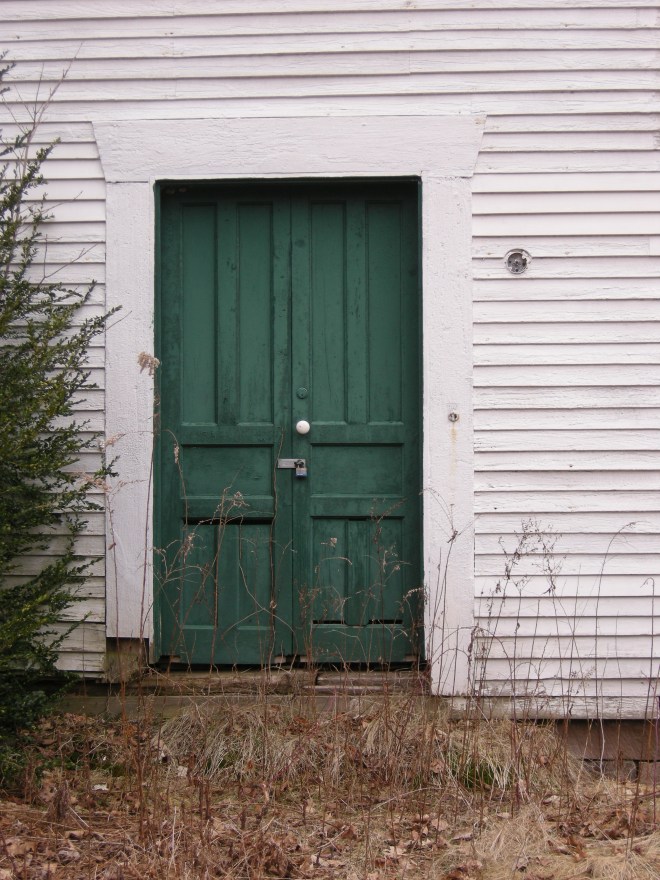
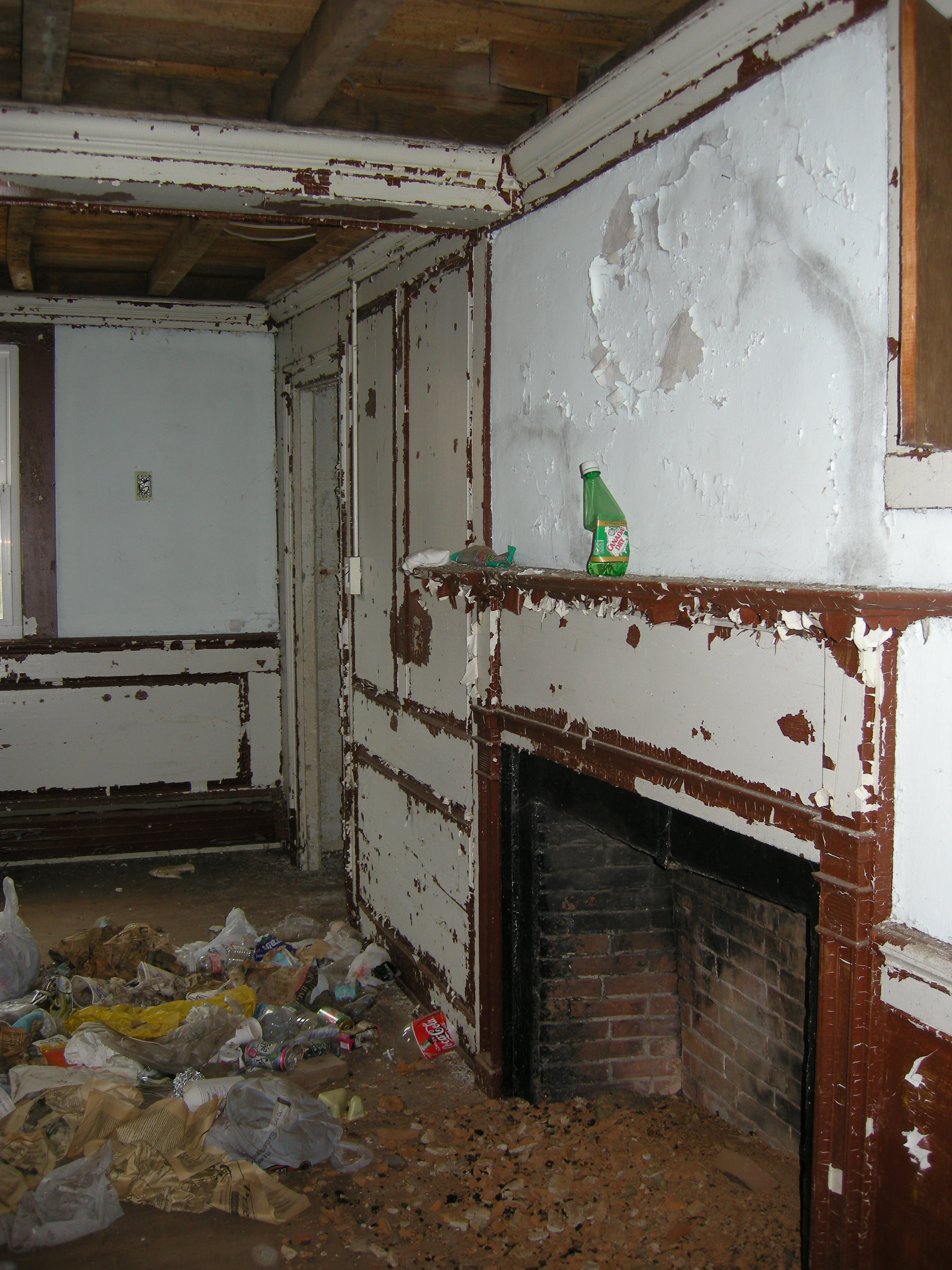
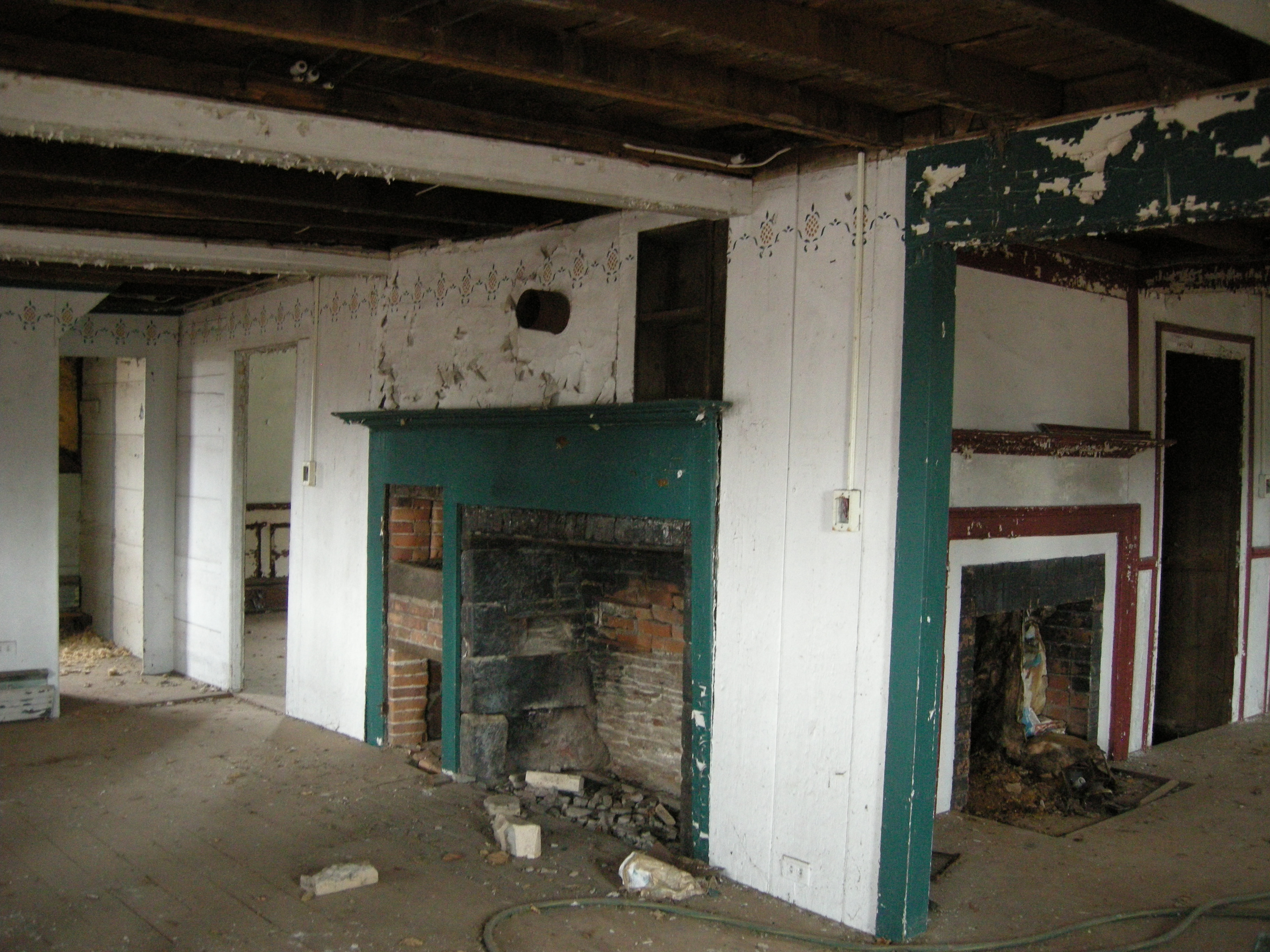
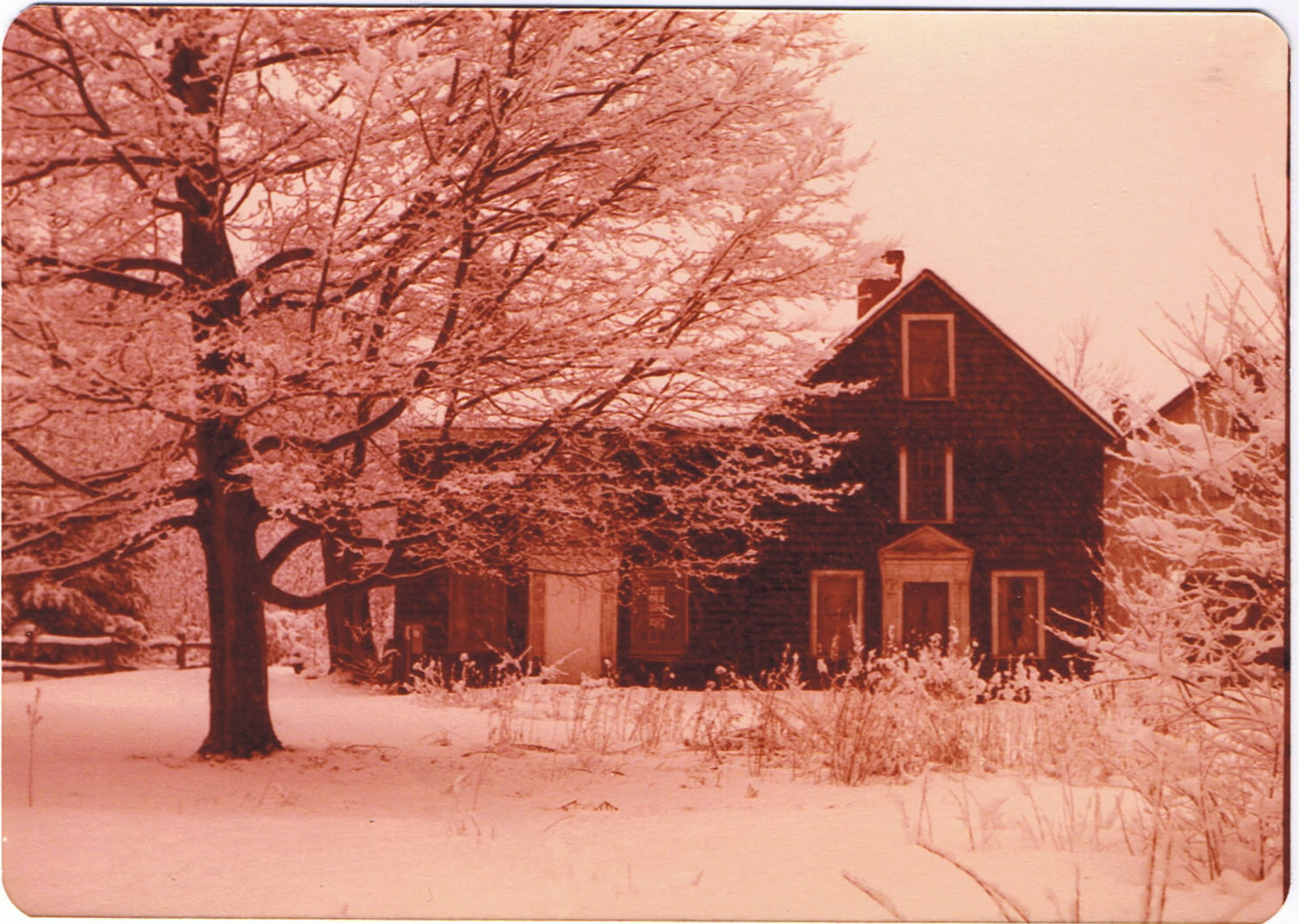
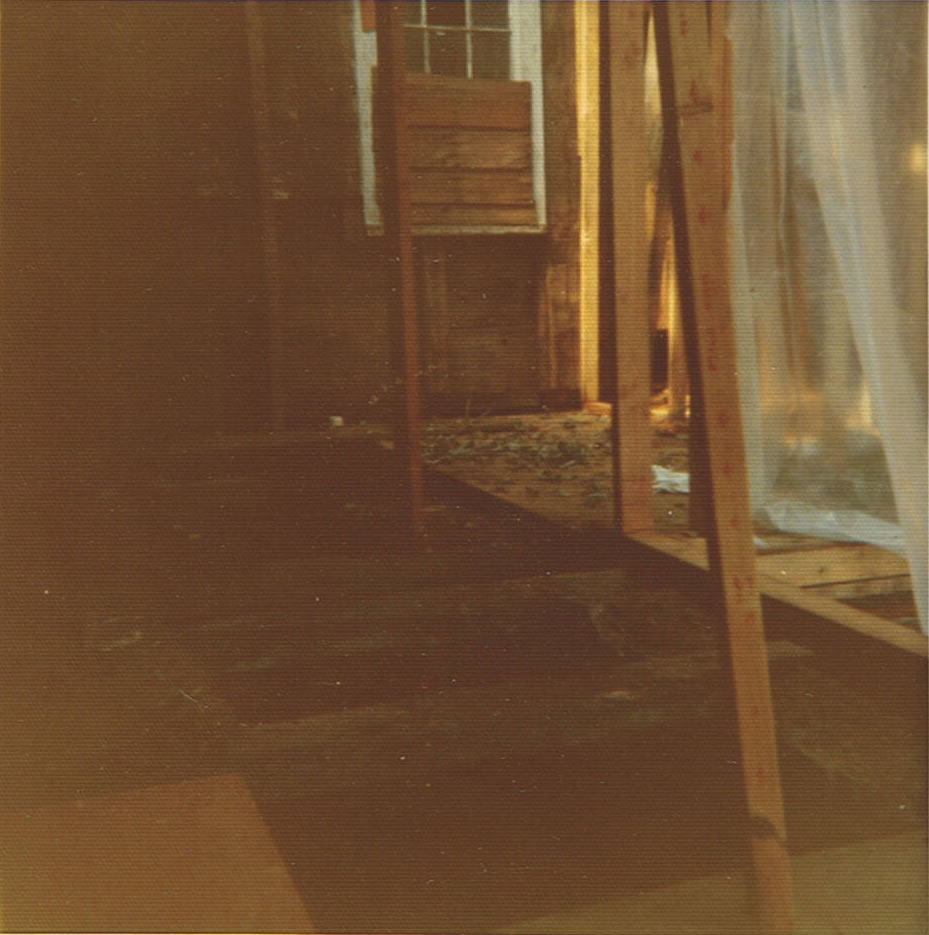
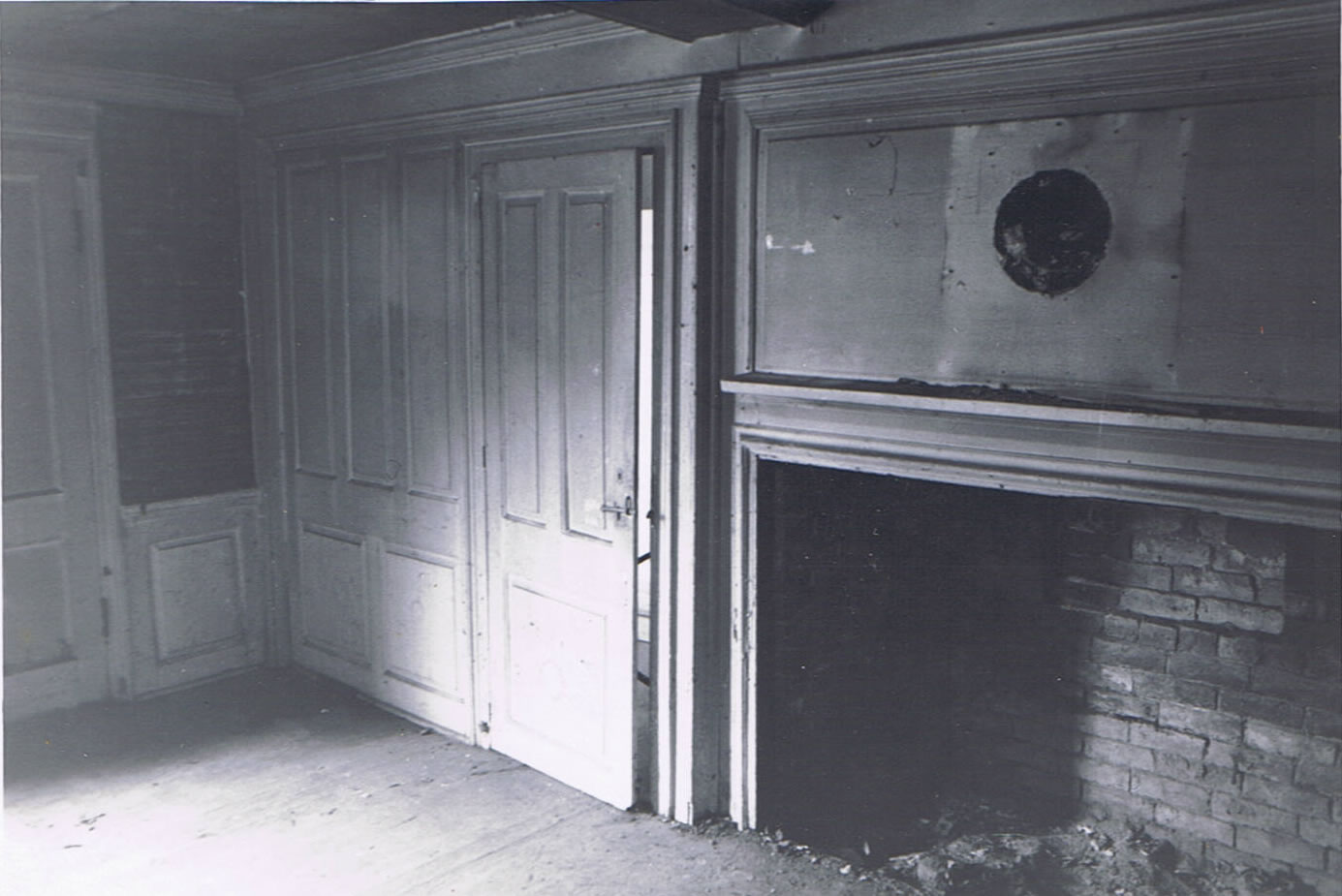
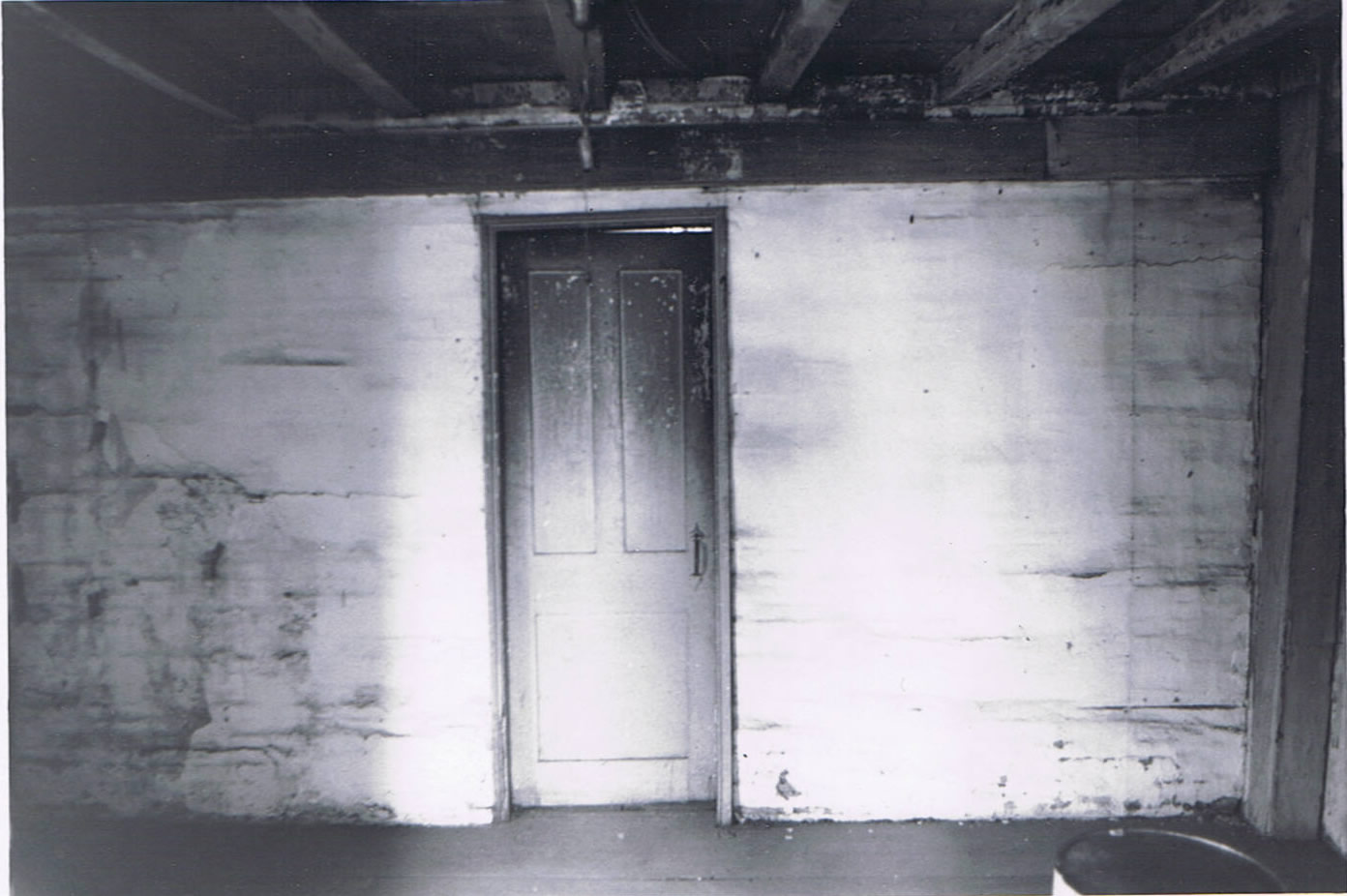
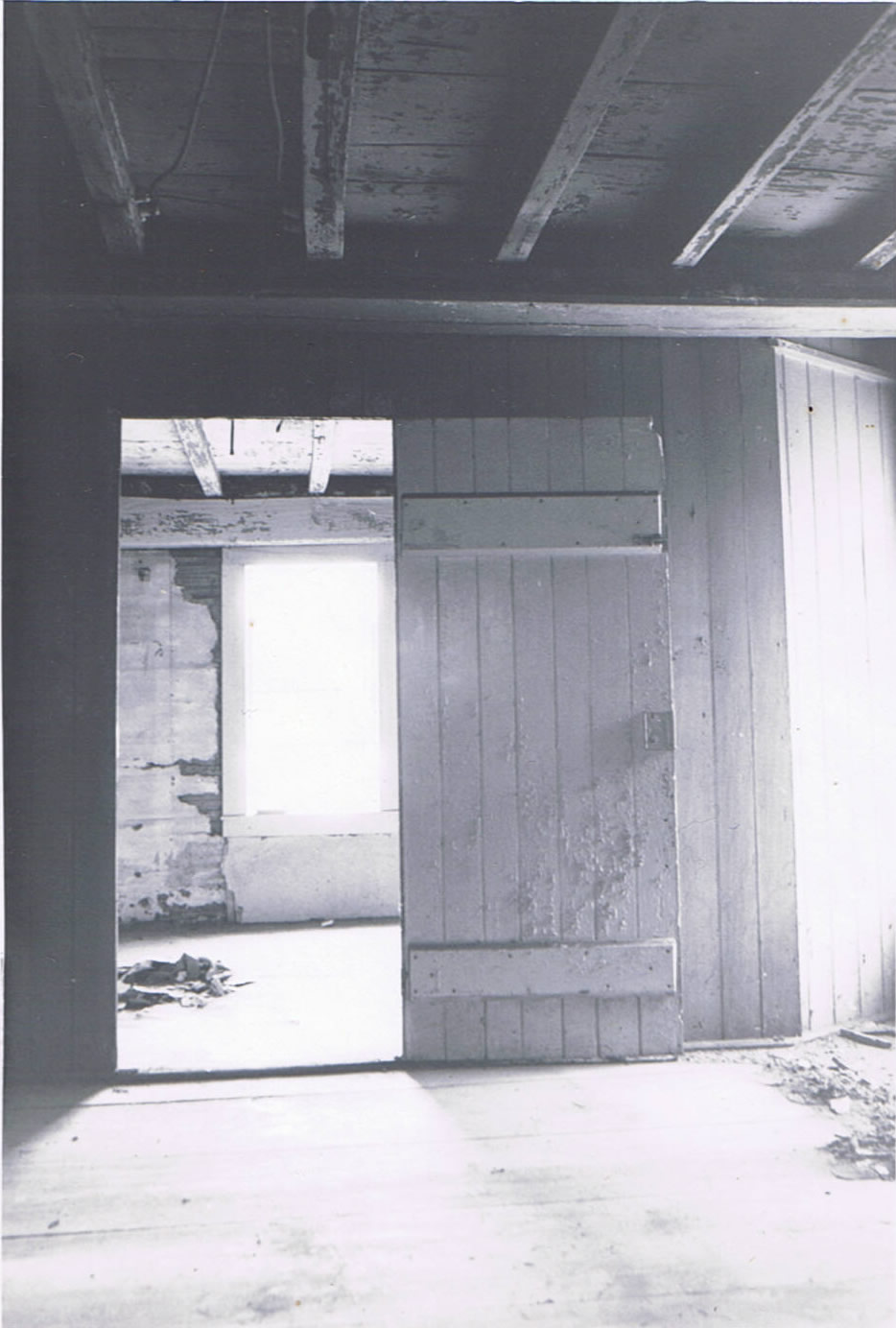
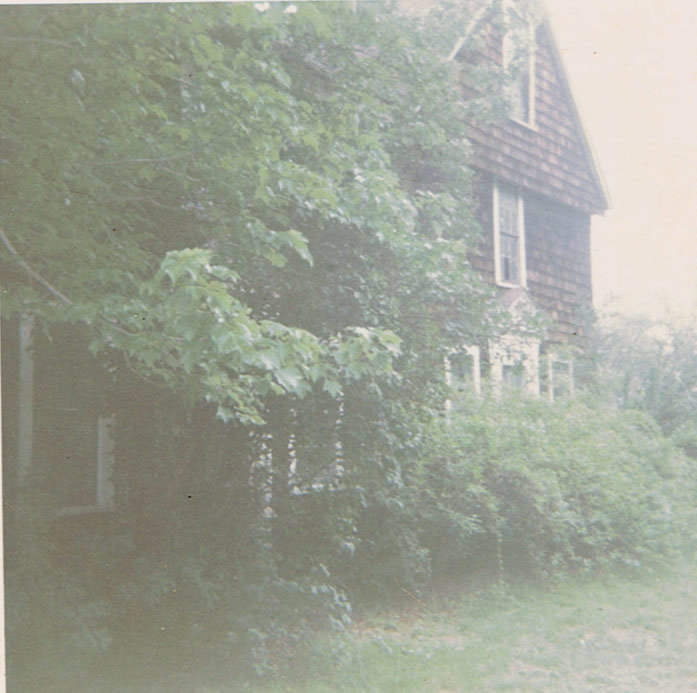
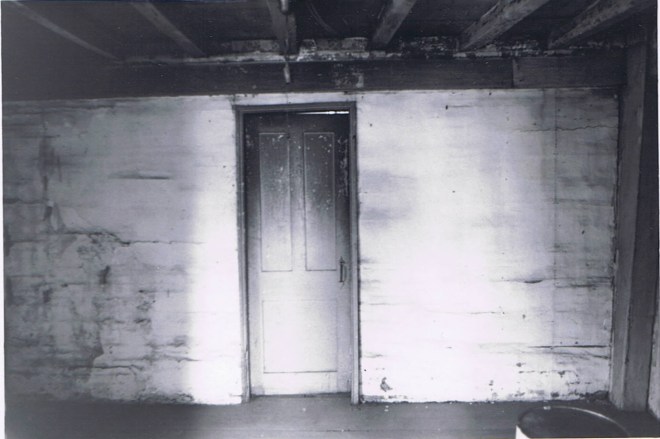
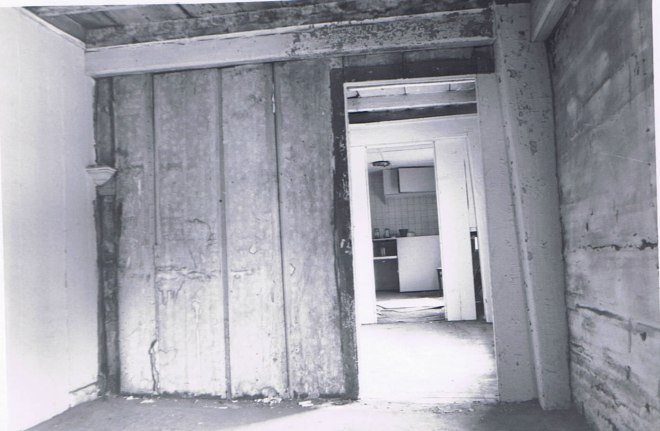
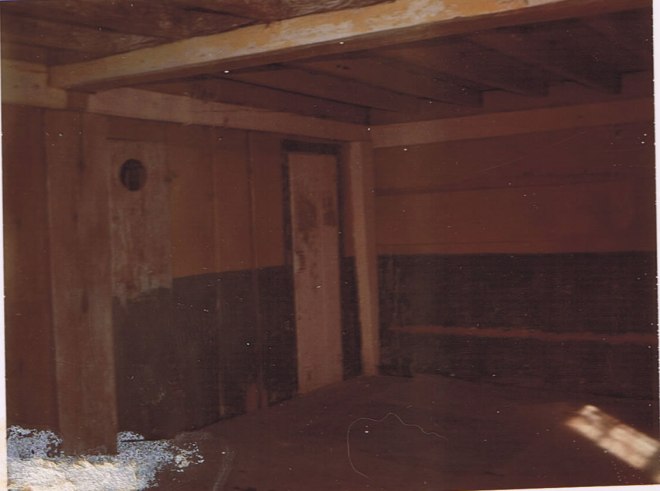
Just when you think they’ve all been found, moved, rescued, or demolished – there’s another one.  I will concede though, that the best, i.e., the earliest or the most architecturally complete, are, in all likelihood, accounted for by now.  But a few abandoned later ones that retain good frames and some of their interior trim, can still be found.  This old house sits on its acre island cut off from the mainstream by highway on all sides.  It faces a mountain sliced for development, and its backside overlooks the eighteenth hole.   Abandoned for years, it still stands tall and proud, despite vines, tree roots and varmints.  Inside (yes there’s always an opening somewhere) were signs of previous visitors, the kind that walk on two feet and come with crowbars for removing items of interest.  The paneled walls were missing their matching doors, holes were poked in the ceiling in search of good beams, and some beaded sheathing boards were missing from a pantry wall.  Surely they’ll be back for more.

I will never understand how anyone can remove items from a house – especially items that are so integral to it.  The doors are part of the overall panel design of the wall – why would anyone remove them?  Why take the top two boards from a wall of beaded sheathing?  Once that wall is stripped to its natural color, the top two boards will have to be replaced with either new or antique ones – hard to match exactly.  That said, the house still retains some paneling, wainscot, and flooring – which I hope will remain until we, or another, secures the house for restoration or relocation.  Yes, relocation, because,  as you know, there isn’t much interest in a house surrounded by highways and modern development.  It deserves better, akin to the rural setting it once had.

It is a later house than we typically fawn over, but perhaps because of the scarcity now of earlier homes, I’m  appreciating the later even more.  While I might have driven right by in a previous life, today I want to save every old piece of wood.  It takes a hundred years to achieve that wear and color!  You can’t fake it.  The fake stuff – fooling with stains – wears off, especially if it’s on the floor.  There’s nothing like antique flooring with it’s aged color.  And I hate to remove parts of a house – if the house is viable, the floor should remain with it!  This house is probably after 1770, but its charms are enough to want to save it.  I’ll let you know if we do, ultimately, and hope I can one day offer some “after” photos to succeed these “before.”

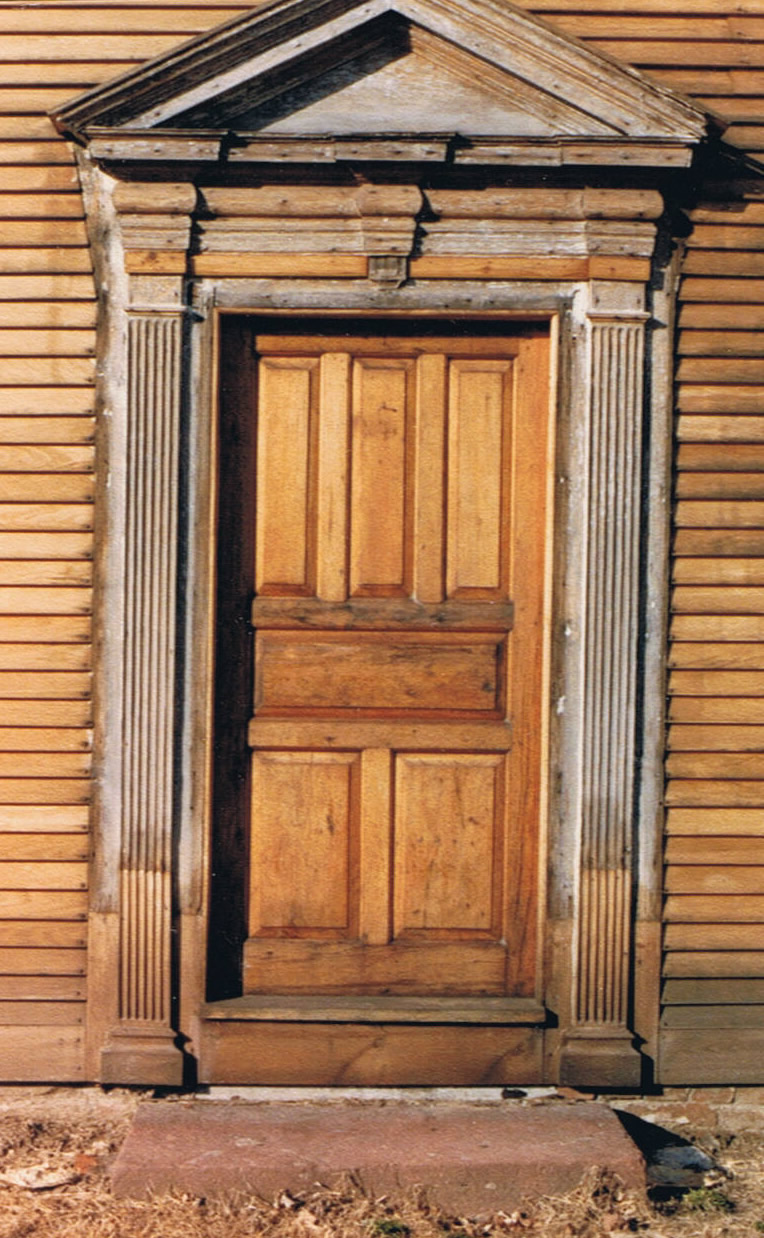
double door with splayed header

front room panelingpaneled staircasestaircase walltwo roomssecond floor fireplaceold settingold path

decisions, decisions…

It’s a good idea to dig deeply into the genealogy and history of an antique house before beginning restoration.  Besides what the architecture of the house tells you, the local historical society, the library, and especially the State Library, are wonderful resources for finding information about the age of your house and the families who lived there.  That will be the easy part.  If you find that your house was built in one century, then added onto and embellished in another – what will you do?  We know of a house nearby that, when found, was a lovely example of early 18th century architecture.  When the new homeowners found an extremely large fireplace in the front room and what they thought were remnants of casement windows in the walls, they decided to restore it to the more primitive 17th century.  The casements are beautiful, and the front door, reminiscent of the old Indian door at Deerfield, is very convincing, right down to the wrought iron ring door knocker.  Recently, the town historian’s research found evidence that the house was actually built in 1750.  What do you do with that?   Obviously, they set their time machine too far back, and it would be not only costly, but a shame, to undo.

We almost made a similar mistake.

When Alexander Pope said, “A little learning is a dangerous thing, ” he wasn’t just a kidding.  The three magnificent CT River Valley doorways that I mentioned are on our house – we actually considered removing.  We were young, had done some prior restoration and renovation, but nothing of the caliber of this 17th century treasure.  We knew it was built in 1698,  appreciated all of the original fabric of the house, both 17th and 18th, and would never have disposed of any of it.  We were simply deciding to which period we should return.  Toward that end, we sought advice.

I had met a couple who were considered experts on early houses.  They lived in a colonial they had personally restored to its original purity – and it had no electricity, plumbing, or other modern conveniences, at least in the main house.  They cooked over an open hearth, ate by candlelight, and even dressed in colonial garb.

In hopes of learning a few things from them directly on 18th century architecture, I signed up for one of the classes they offered, at the local college, on colonial living.  The husband and wife wore their 18th century attire, he, in the tri corner hat, and she, in the layered dress.  While Mister C lectured on the merits of simple living, the use of herbs for “meate or medicine,” and on early customs from sparking benches to bundling, Misses C was busy building some 18th century snacks, and a Christmas punch, with punch.  After Mister showed us how to grate some whole nutmeg into an ancient wassail with an odd tool, I introduced myself as a fellow 17th century home owner, and asked if I might ask him some restoration questions.  Seemed a man wearing a tri corner hat was surely an authority on the subject.

Over a drink of wassail, I told him of our dilemma.  We have a 17th century house, I said, in an 18th century skin.  The early casement windows have been removed, and replaced with 12/12’s and doorways added in the 18th century.  I described them.

Right then and there he should have replied – wayward child, you cannot remove those doorways!  But he didn’t.  He suggested there were merits to keeping certain architectural elements that document the evolution of a house.  Then he agreed that, yes, it was a dilemma, especially when one yearns for the primitive.  If the inside was to return to the 17th century, then would you leave the 18th on the outside?  Would that work?  He empathized.  That surprises now, only because we know more.  Because we’ve dug deeper.  Because we understand the evolution of the house, appreciate the history and craftsmanship, the “flowering” that occurred in the mid 18th century along the CT River Valley.  To have removed that original fabric, something so fine and so rare, so important a piece of American history and architecture, would have been a travesty.

We are not perfect; none of us are, in any field.  It is a goal never attained.  It is the striving toward it, though, that brings wisdom.  Patience and persistence, and endless learning, is key.   In restoration, as in life, we must move very slowly, dig deep and drink large the information needed to achieve the almost perfect.

Alexander Pope, 18th century poet:

“A little learning is a dangerous thing

Drink deep or taste not the Pierian Spring:

There shallow draughts intoxicate the brain

And drinking largely sobers us again.”

Doorways cont’d

In the “old” days, if you came across a house that looked like it was undergoing restoration, it was not uncommon to stop and knock on the front door – just to tell the homeowner how much you admired their house, appreciated what they were doing, and hoped for a peek inside.  We did that often, occasionally still do, and more than once found ourselves on an impromptu tour of the owner’s “labor of love.”

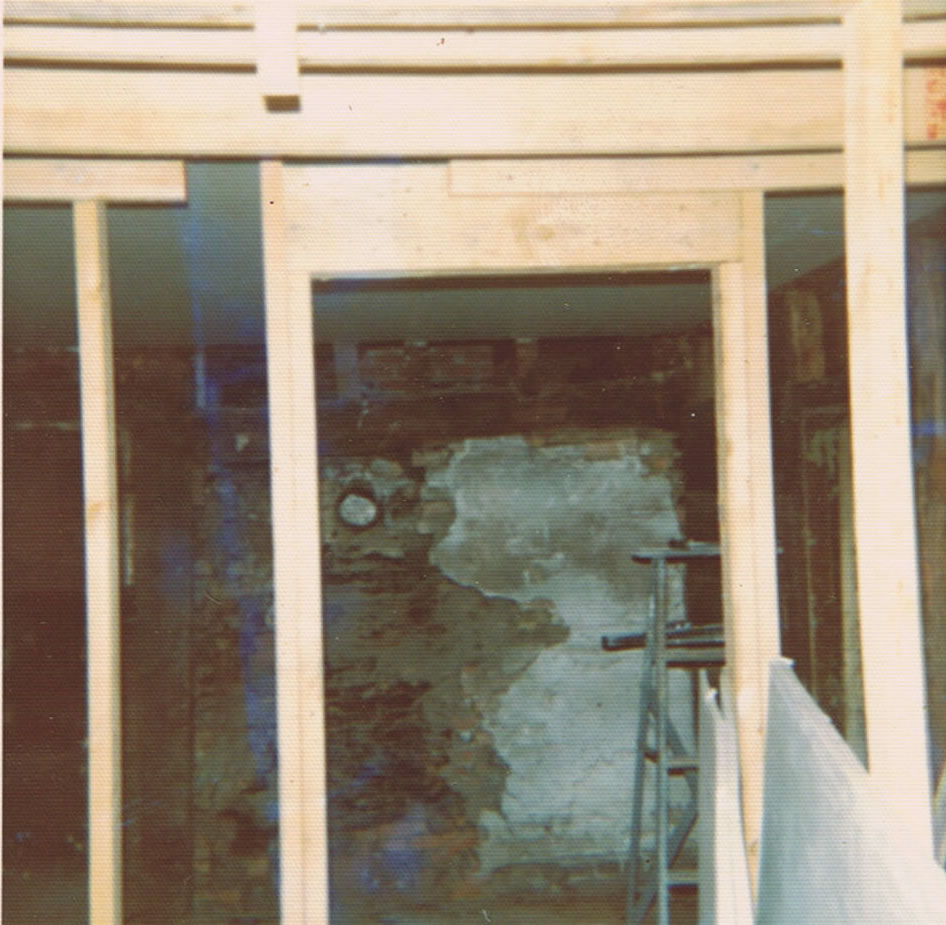
front doorway under restoration

One day, we had just such a visitor ourselves. They came right up to the front door, gave it a good hard knock – and it tumbled right over into the hallway!  You should have seen the surprise on their faces as we came to the opening where the door used to be.  That heavy two inch thick paneled and battened door, that we had just made, lay cocked diagonally against the staircase wall. They thought they’d broken our door and their apologies were profuse. We assured them no damage was done.  We had just been fitting it in place, and left it for a few minutes while we had lunch. We’ve had many a laugh over that. And they of course, were welcomed in for a tour of our labor of love.

We’ve visited many labors of love over the years.  Most folks enjoy sharing their projects.  The tour usually starts with an apology for the mess – ours included.  One never knows just how accustomed strangers might be to paint scrapings on the walls, wood shavings on the floors, plaster spills and half constructed cabinetry.  Some folks are enchanted as they walk through the history of it all, focusing on original details, asking a myriad of questions, eager to learn about the process.  While some, usually wives, are dragged through by their interested husbands.

We once had a garden tour, the house was open as well, and I remember a woman dragging her husband through, eager to get to the garden.  His eyes were on the ceiling, admiring the massive summer and the hand hewn girts, and anything else he might spy in the split second it took his wife to pull him through the room.  The poor man didn’t have a chance.  Because the route to the garden began at the front door, and through the house, didn’t mean you had to like, or look at, the rooms.  Her eyes were downcast, and she clung to him tightly, as though in fear the beams were about to fall on her.

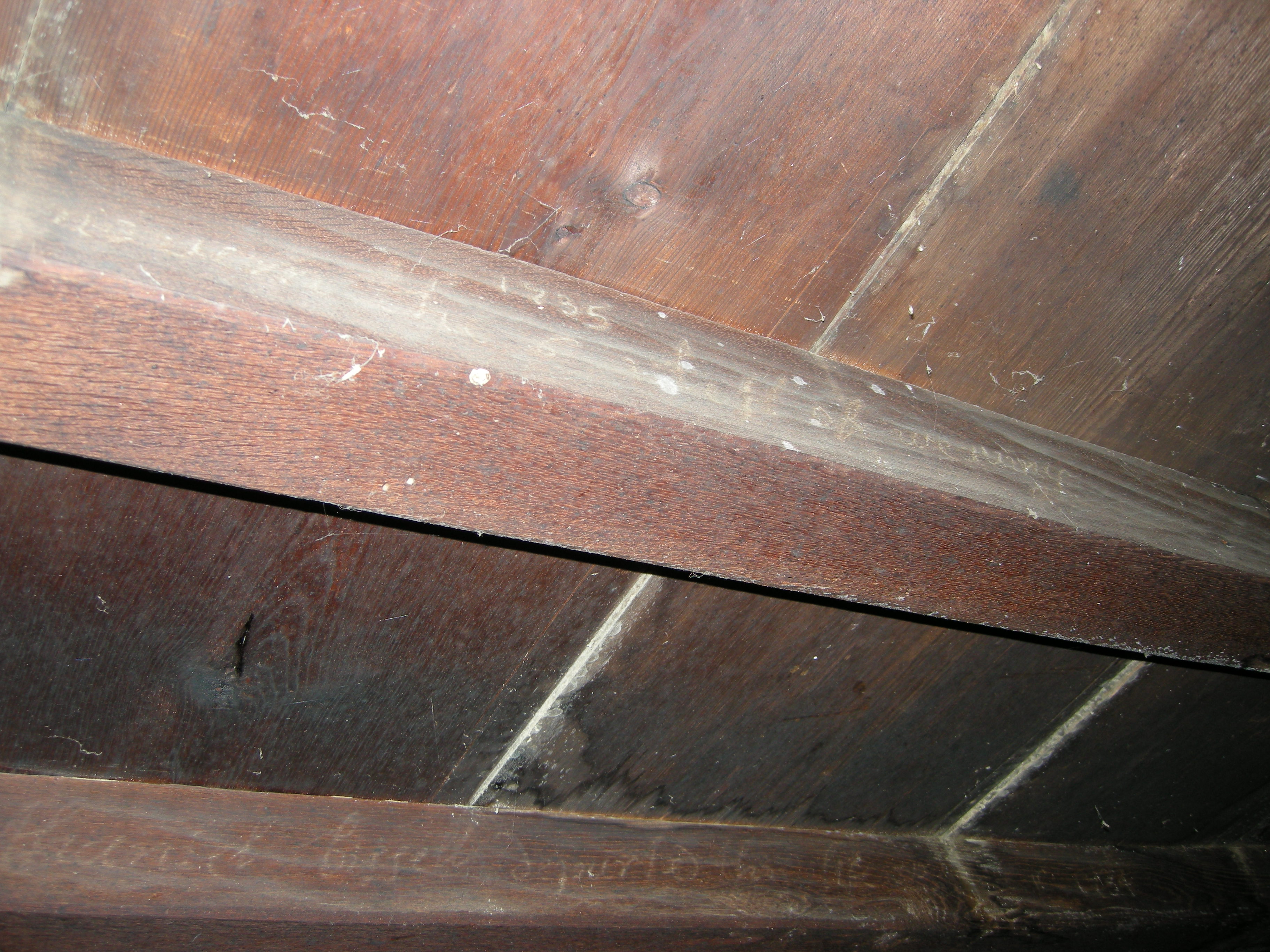
I find myself entranced in such rooms, soaking in the ambiance, pondering and wanting to touch everything!  Which is why, so long ago upon visiting museum houses, I determined to have my own, one I could touch.  The beams of an old house have an immense presence.  Rather than danger, to me they spell protection.  The old wood has hardened practically to stone, their spans holding up sometimes beyond their expected strength.  The joists, colored from smoke and time, a precious charcoal and chestnut.  And the writing – there was writing on our beams.  The children marked occasions of a ferry ride with their uncle, the ferryman, across the river and into the city.  “I left off weaving novem 6 1735” or “i o u kids 42p” was written across the joists.  The latter expression was a surprise, we didn’t know existed then.  The most poignant was the noting of a father’s loss.

The children loved to write their names….

There is much history to touch, and learn about, in old houses.  The old families interactions with their neighbors, intermarriages, descendants, and all it leads to, is the stuff of books.  Their lives were as full and rich as ours, in spite of what we might call a lack of progress.  I hope to get some of their stories off of the beams and onto paper, one of these days…

Ct Valley Doorways

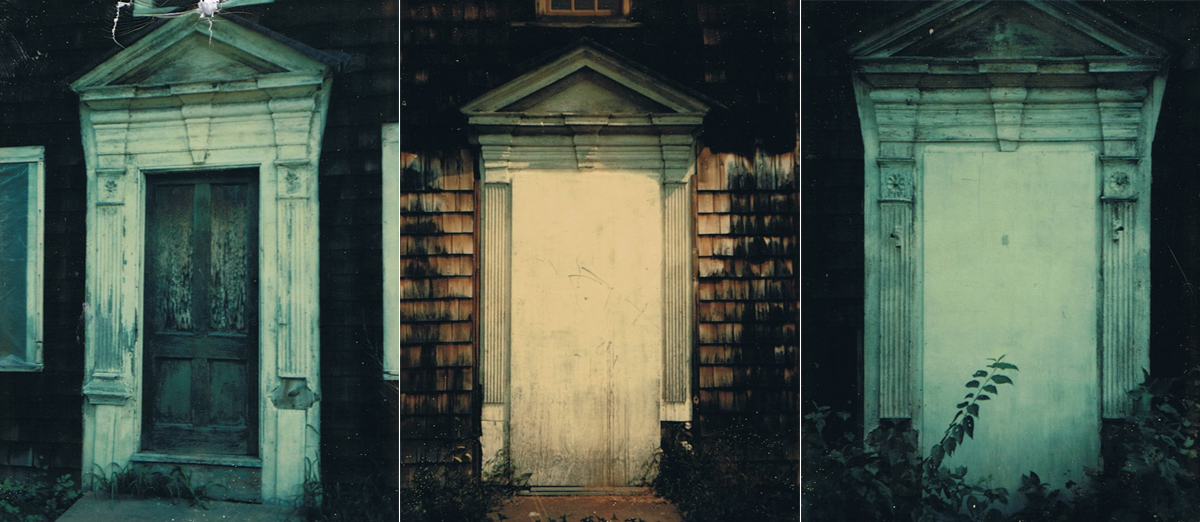
It’s one thing to be lucky enough to have a magnificent 18th century pedimented doorway on your home – but another thing altogether, quite amazing really, to have three!    Built in 1698, our home was added onto and “improved” in the mid 18th century by replacing the old diamond leaded casement windows with double hung 12/8’s.  Two doorways were added at the side and trimmed with triangular pediment doorways with carved rosettes, while the front door received the same treatment but without rosettes.  Except for one other home nearby, ours is the only one left in town to display these relics of “an 18th century flowering” along the CT River Valley, as it was called by Amelia Miller in her book on CT River Valley Doorways.

First, I want to share a photo of the entrances on the other house I mentioned.  The craftsmen who created these door surrounds probably also worked on ours.  This particular house has the mother of all scroll pediment doorways.  Besides that prize, there are two triangular pediment doorways at its side.  Here is a photo I took recently of them.  Now, one must genuflect, yes right there in the street, before the scroll pediment with its original double doors and hardware.  You will not find a more exceptional doorway anywhere.  Note the mimicking of the scroll at the pedestal base as well as in the bottom panels of the doors; the elaborately moulded entablature, foliated carvings, dentil mouldings, curve of the scroll, its carved six pointed star.  It is all beyond words.

There were several other houses nearby with triangular pedimented doorways, but they are now lost, as so many were in the early years of the 20th century.  Now, only two remain, testaments to the 18th century craftsmen of the CT River Valley.   A few of these men carved their way through the river valley from Wethersfield, CT to Deerfield, MA hired by the “nouveau riche” of the day, mid 18th century merchants, ministers and entrepreneurs, who could afford these services and wished to display them.  Homes along the river were embellished with scroll, triangular or flat pediment doorways by craftsmen anxious to express their creativity and display their talents, each trying to out-do the other.  There would be some variation in their styles, from the angle of the pediment to the carvings in the capitals.  Surely there was a healthy yet friendly competition, the fruits of which we get to marvel at today.

Triangular pediment with rosettes

Below is a photo of the three doorways of our own house, as found.   Original doors were missing, but thanks to early photos, we would reproduce them.  The two with rosettes are the matching side door surrounds, and the center one is the front.

Most of the original fabric of the entrances were in tact, but along with the sills beneath them, much of their bottom sections were missing.  Traces of the the design remained in outline on the backers, thus enabling us to accurately reproduce and replace them.  Using a strong magnifying glass to closely view the original details in 19th century photos of the house, we were able to make out the design and panel arrangements of the original doors that were in these openings.  Using old boards, that before mentioned ten dollar table saw and a few hand tools, our reproduction doors were fabricated – right there in the front room behind that CT Valley entrance.

Here’s a wonderful photo of a house now gone, that once sat directly across from ours.  It was truly unique with its brick ends, pedimented windows and front door.  Built by Jacob and Abigail’s son, Timothy, by the time this photo was taken it had seen better days.  There is a very nice lady living in the prim, white, four square house her uncle built in its place, after demolishing this one.  I can’t begrudge her for it, or her uncle, as I’m sure it was times like these in which the owners found themselves without the means to maintain it.   But it was certainly a gem.

restoration cont’d

Out with the new – in with the old!  Isn’t that every old house lover’s motto?  In our restoration, anything that post-dated 1800 was the first to go.  Then we’d work our way back selectively.  The front room of the house, the original kitchen, the one with the half demolished chimney in a previous post, had newer sheetrock on the walls, new square trim, base, door and window frames, and a later plaster ceiling.  But we knew what lurked behind.  We removed the ceiling to expose the beams, and ripped the sheetrock from the walls to expose the original feather edge boards that lined the three exterior walls.  Isn’t this gorgeous?

I’m talking about the featherboarding!  As to the youthful, energetic woman in the foreground, well, she’s still the same – on the inside! And still loving those overalls.   Don’t you just hate wearing anything you have to worry about getting paint on?  Or cobwebs or sawdust, or chocolate frosting – I digress…

Since I’ve been taking you all down a dusty path, I thought it time for some before and after photos.  At least a sampling to show there was a reward down the road for the years of work.  Here are a few:

kitchen wall - before

kitchen wall after

kitchen fireplace wall - before

new kitchen fireplace wall - after

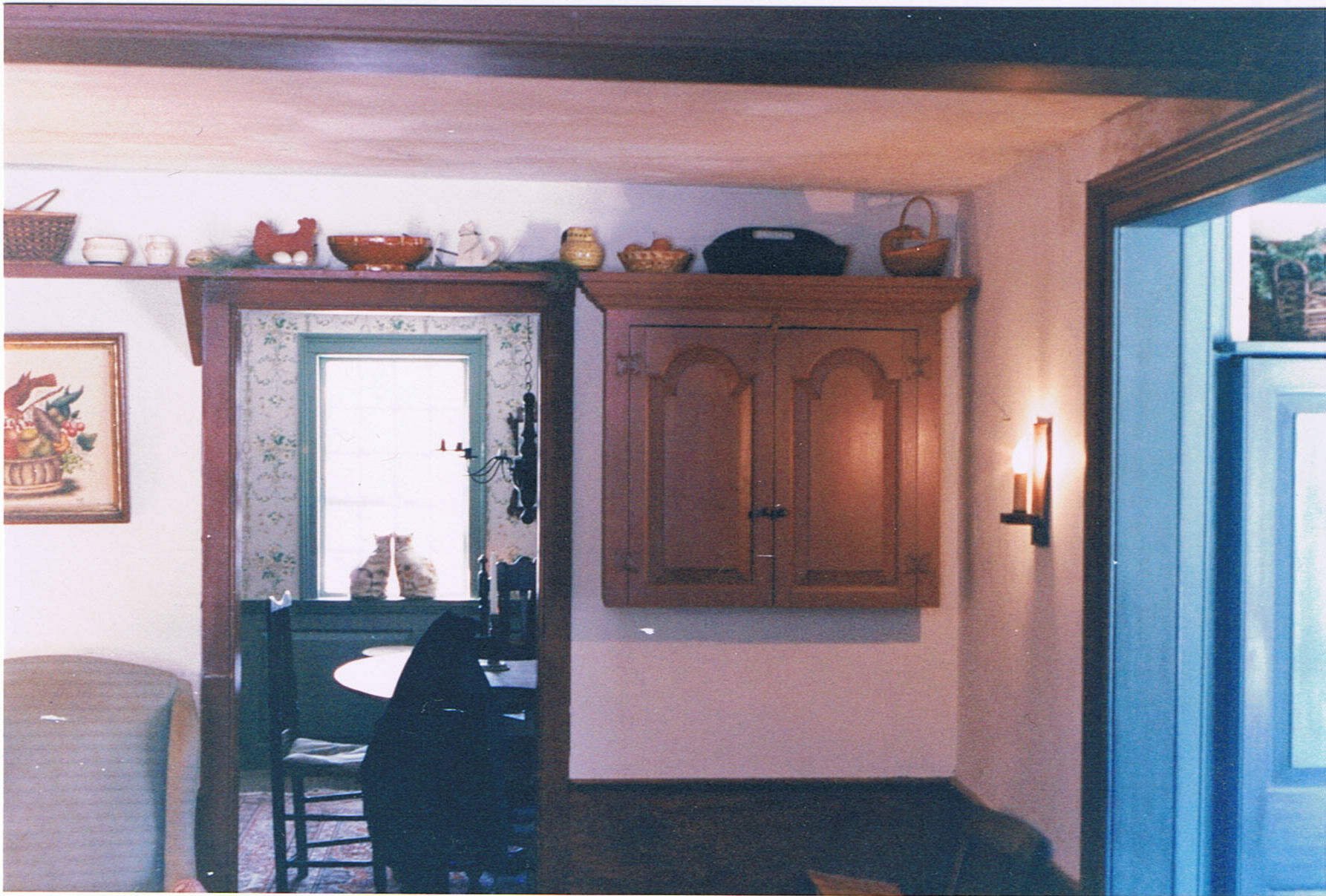
front room, early kitchen - before

to be continued….

siding

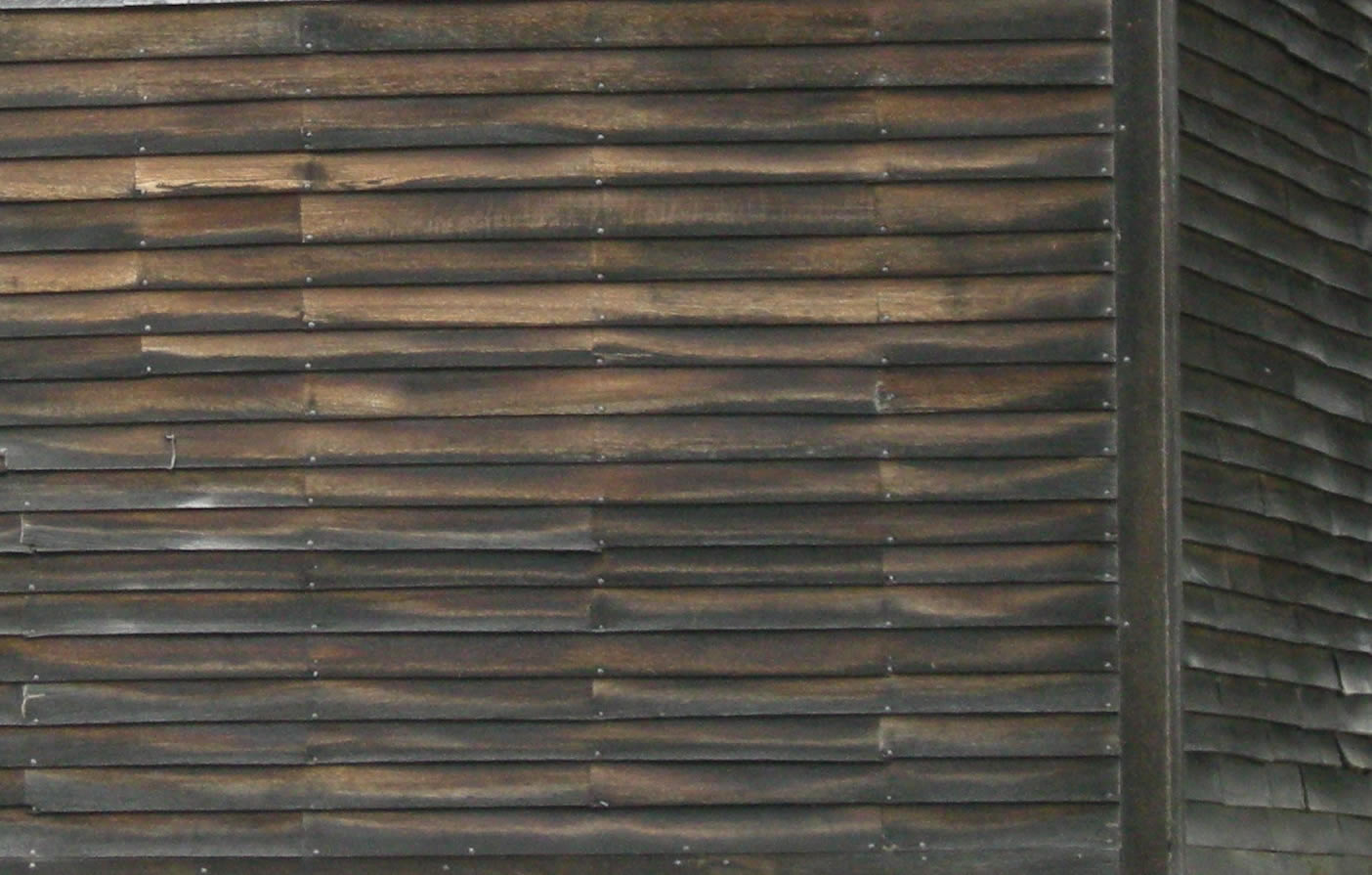
When we first found it, the house was covered with shingles that had weathered a rich, deep, tobacco color.  Unlike houses at the shore, which are almost invariably shingled and turned a silver gray by the salt air, our inland country home in the CT River Valley had weathered the color of its local crop – tobacco.  But shingles were not used inland two hundred years ago.  Oak or pine, sawn into clapboards, would have been the original material of choice.   After visiting the Hempsted house in New London, and falling in love with the siding color and texture, we had a local mill cut rough pine into clapboards for us.  The finished side would face out, by the way, never the rough side.

We then dipped, or soaked, the first batch of shorter lengths in a big barrel of the witches brew we had learned about at the Hempsted house.  We affixed the short, scarfed, clapboards at the back of the lean-to and new bathroom section first.  This ultimately would be the only section on which we used the “brew.”  It would be two years before we got to siding the rest of the house, and by then, the “forbidden” product – creosote – the main ingredient of the “brew” was no longer available.  So, the rest of the house was simply coated with boiled linseed oil, a task we’ve neglected to re-do much over the years.  Somehow, these clapboards have weathered the time and neglect amazingly well, and aged a most beautiful pumpkin, tobacco, and other dark shades of pine in spite of us.  The back side, however, still retains that original charcoal color.

Every clapboard was cut by hand, scarfed one edge over the other, and fastened with a rosehead nail.  I can’t remember where and how we acquired all those nails at the time, they were all antique.  Siding has to be figured and fashioned to fall on a stud in the process, and all of the nails needed to line up, all the way up the house.  Windows and doorways are the exception, but somehow, it works.  There should be symmetry with the line up of the nail pattern, as this will show over the years.  The nails will rust and run and create a line that the eye will see, which only adds character to the unpainted house.

We removed shingles in stages, for the siding process.  When we came to the second floor, we exposed the original insulation – a combination of clay, mud, horse hair, etc. –  called daub. It had apparently been removed over the years in other areas, perhaps when the shingles were installed, but left here, probably for the same reason we would decide to leave it.  It was set in so tightly between the framework, it seemed to be doing its job quite nicely, and the fact that it was original, was another treasure to us.  Why not leave it?  Even though it would be covered over, we would enjoy knowing that that much more of the original house was still in tact.  Another original piece, made right here, from Jacob and Abigail’s earth, even from their horses!  Hmmm…I wonder if their original horse can be cloned using the DNA from some of this hair?  I’ll have to leave that wonder for a few generations next!

restoration- the chimney

Most of us take lots of photos when working on a project, to document the progress, to later compare the before and after.  In the case that you might want to write about it someday, I highly recommend dating them, then storing and organizing them in something other than shoe boxes, bags and drawers.  My photos are as scattered as I am, and my time filled with too many distractions.  Memory serves pretty well, but there’s nothing like turning over that photo and finding the date and situation noted.

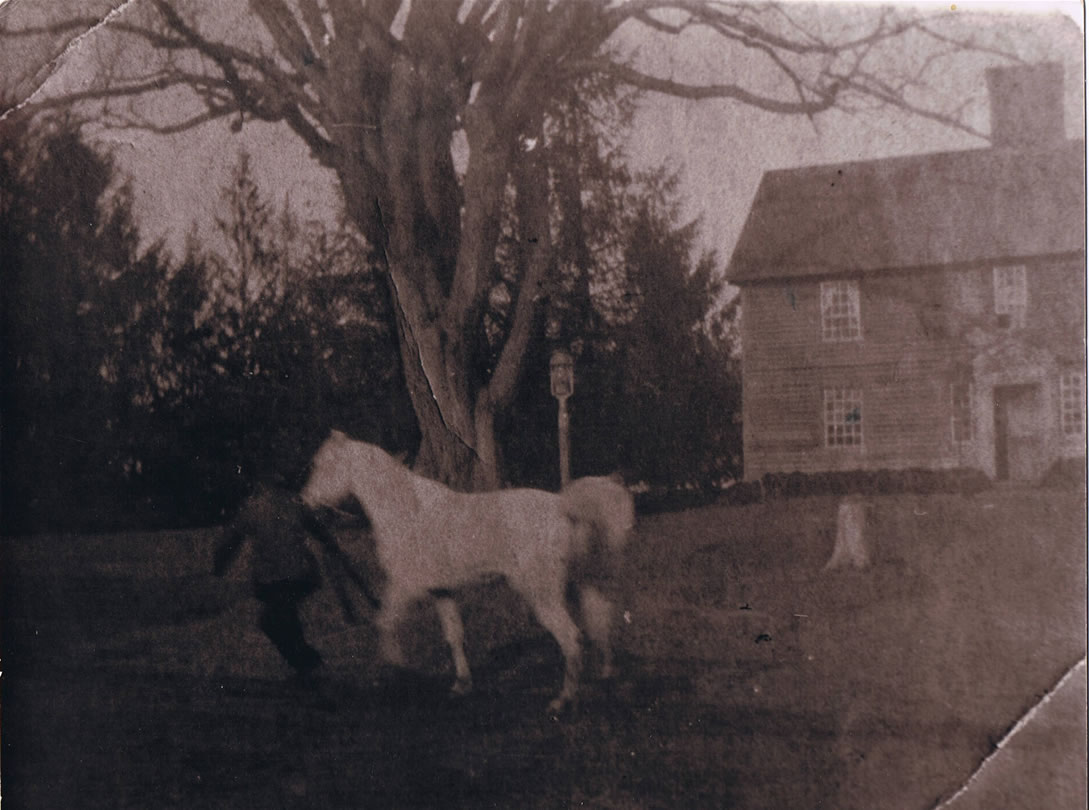
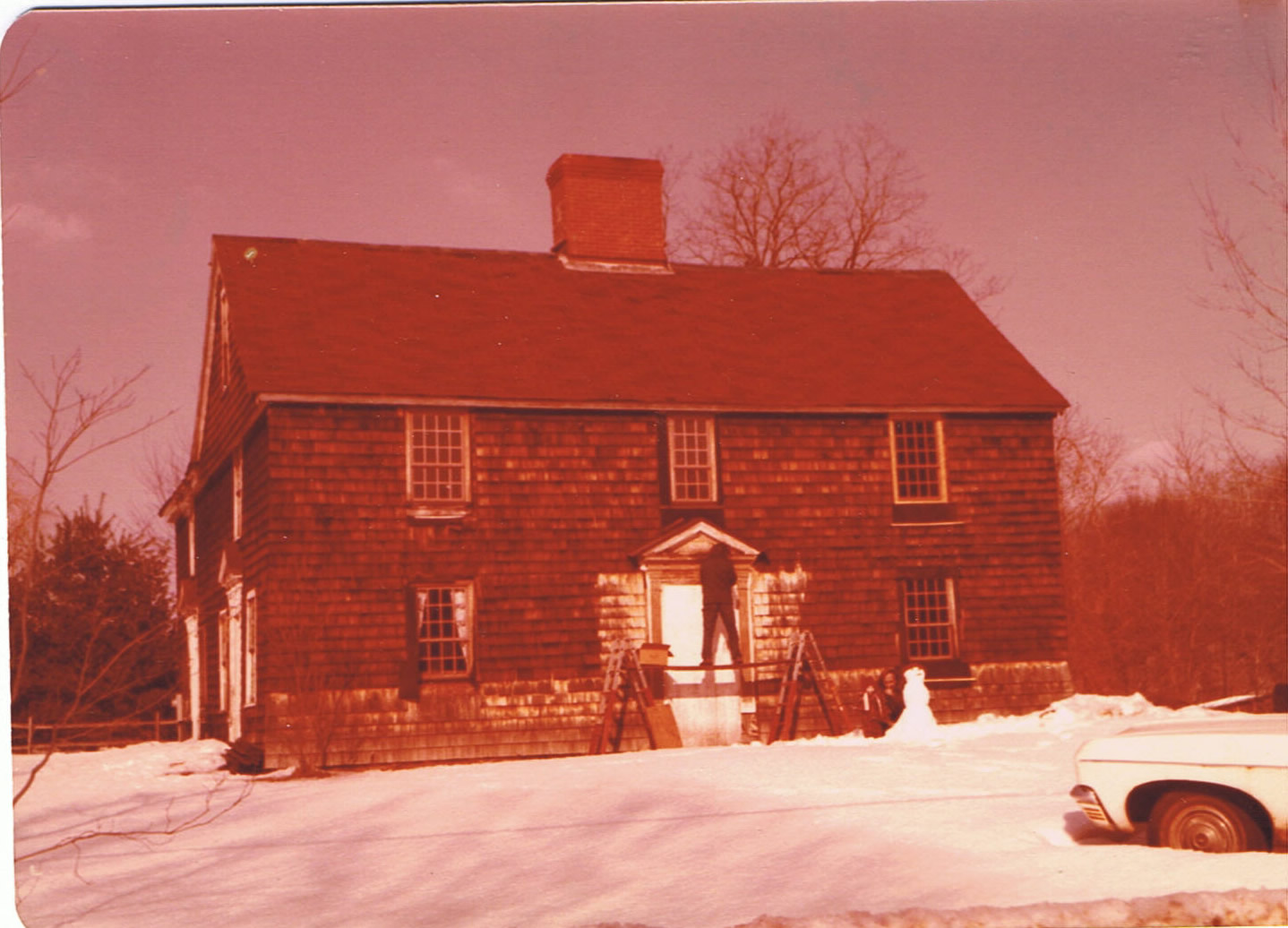
Here’s one, of the front of the house, after our two year hiatus.  We had returned from sunny California into a New England blizzard.  But that didn’t stop Edward from setting up outside the front doorway to tend to repairs.  The front hallway of our 1698 house originally had no windows, the side lights were added in the 1800’s.  We removed them, and re-shingled to match the existing siding.  This was a temporary fix, as we would be re-siding the entire house soon with pine clapboards.  This photo shows the windows already replaced with 12/12’s and the chimney rebuilt.  A Yankee carpenter who worked out of a small country lumberyard in the neighboring hills made these for us.  His shop was tiny, but efficient.  The twelve by twenty foot room was lined with benches, hung with tools, and heated with a wood stove.  Wood scrapings and sawdust lined the floor.  A table saw sat in the center, and Fred ruled it all.  He was a woodworker, a blacksmith,  a dowser.  He was one of those Yankees who could fix anything, and if he couldn’t, it probably wasn’t worth fixing.  He was one of those rare gentle men who valued tradition,  and doing things the old fashioned way.  He would visit later, to help us find water – the old fashioned way.

Below are some photos of the fireplaces and chimney restoration/rebuild.  Finding a mason for this was serendipity.  A total stranger stopped by one day who said he was a mason who worked only on old fireplaces and chimneys.  He said he could make it look just like it used to, he had some tricks to make it look old.  And yes, he could build a bee hive oven.  To top it off, of the four family names that had previously owned this old homestead in the last 250 years – his was one of them.  Quite a coincidence.  However, he personally hailed from Maine.  We took a chance, pushed for the details we wanted, maintaining as much of the original integrity as possible.  Most important were tight joints and a hearth that was not mortared in, just laid tight.  We specified the height and width of the chimney as it came through the roof.  We were incredibly fortunate to have photos of the house that were taken in 1888 showing its original exterior features – chimneys, doors, and pedimented 12/12 windows.

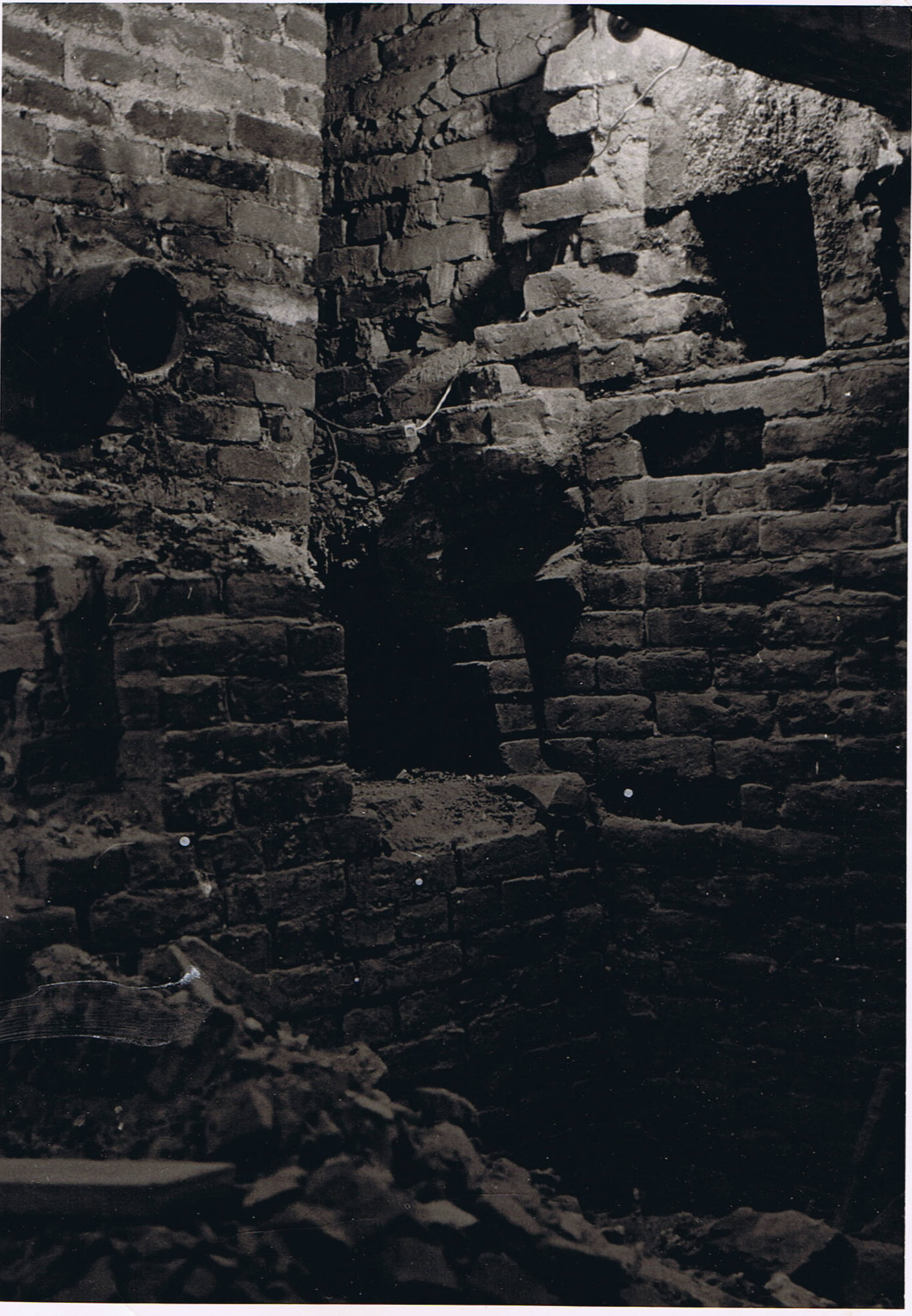
There had been a chimney fire at the second floor fifty years earlier when the bachelor homeowner decided to do his Spring cleaning by burning everything he didn’t want, in the fireplace.  There is still charring on the mantel and summer above.  The second floor fireplace had been lost and the larger chimney rebuilt smaller to accommodate the wood stoves.  Also, smaller fireplaces were laid up in front of the larger ones at the first floor.  When we removed the walls to begin the chimney work, we discovered parts of the larger fireplaces still existed, and their side walls still in tact.  In this photo you can see a little cubby that was built into the side wall, the bake oven and smoke ledge.  We were pretty excited.

Here, you can see through to the other front room.  It was quite a mess, and quite a task.  It was pretty funny.  Actually, the whole process, messy as it was, was a lot of fun.  The mason, as it turned out, was quite the trickster and our days were filled with stories of his pranks.  We should have been worried that he’d tricked us, but as he worked, we could see that he knew his trade.  Here’s a photo of his building the bake oven.  He filled the ledge with sand and mounded it into beehive shape to form the top of the oven.

And another, showing what goes on inside the chimney as it goes up. Cinder blocks are used where it doesn’t show, and can be plastered/mortared over. The clay liner is the flue for the furnace, while brick flues are built for the other three fireplaces. Here he is approaching the second floor. I apologize for the quality of these old polaroids.

We did find treasures, nothing that would pay for the restoration, but something to excite us through it – that touch with the past that one who loves old houses is always looking for. We knew the house had been built in 1698, the year that Jacob married Abigail. And we knew the names of their children. We knew that the bricks had been made locally, probably right in the yard beside the brook. We found many bricks with writing scratched into them, by the homeowners and their children, probably as they were curing by the brook. Jacob’s name was scratched into one brick, and Abigail’s in another. One was deeply cut into, as though with a finger, with the name “Mindwell,” their daughter. One said “welcome,” another had a paw print, and we found one half of a brick with the number sixteen etched into it, but never the other half. We laid these reminders of whose house this really is, and will always be, into the hearths.

restoration

Be careful what you wish for, right?  Sometimes we run headlong toward a dream only to crash into reality.  Fortunately, we were young, energized, and eager to tackle the job when it happened.  I couldn’t wait to rip everything out of that house that didn’t belong.  Beaverboard covered beamed ceilings and featherboard walls.  Newer, shallower fireplaces covered deeper ancient ones, wallpaper covered paneling – and black soot covered everything.  There was a huge coal fired cooking stove in almost every room, with the familiar hole cut out of original paneling to vent it.   Floors were bowed, and original boards lost at the first floor – that awful narrow tongue and groove replaced them.  Even those were painted and rotted.  In every room the floors leaned toward their sills, which were obviously termite ridden.  There were three magnificent doorways on the house, but their original doors were missing.  All of the windows were replaced with six over six’s.  They were made larger, which cut into the interior woodwork.

There was no heat or plumbing or electric.  But that wouldn’t deter us.  There were treasures to uncover.  And besides, we had just come from a project where, for a year and a half, we had lived with an outhouse in the woodshed and a pump outside for water.  We could handle this.

With a ten dollar table saw from a neighbor, a few tools and a lot of gumption, the journey began.

Here are some photos I’ve found.  Wish I’d taken more back then – especially with those monster cook stoves – which a local flea market merchant was so kind to take off our hands.  No easy task, moving those behemoths.
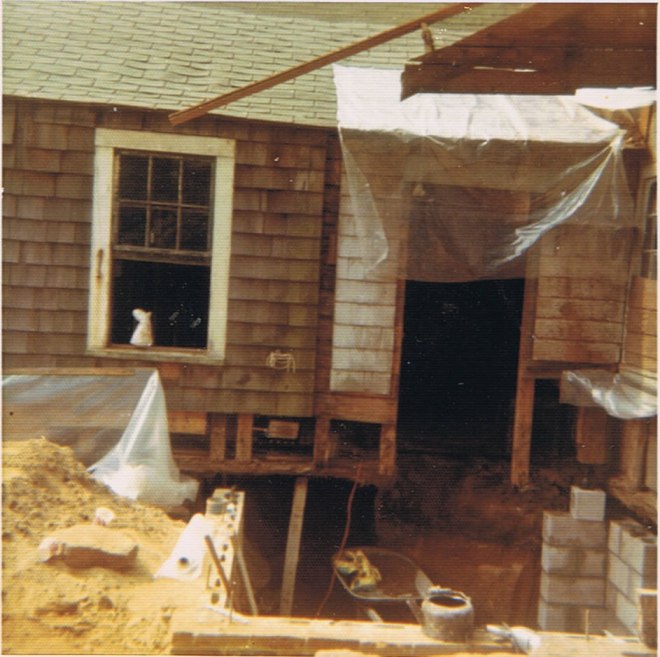
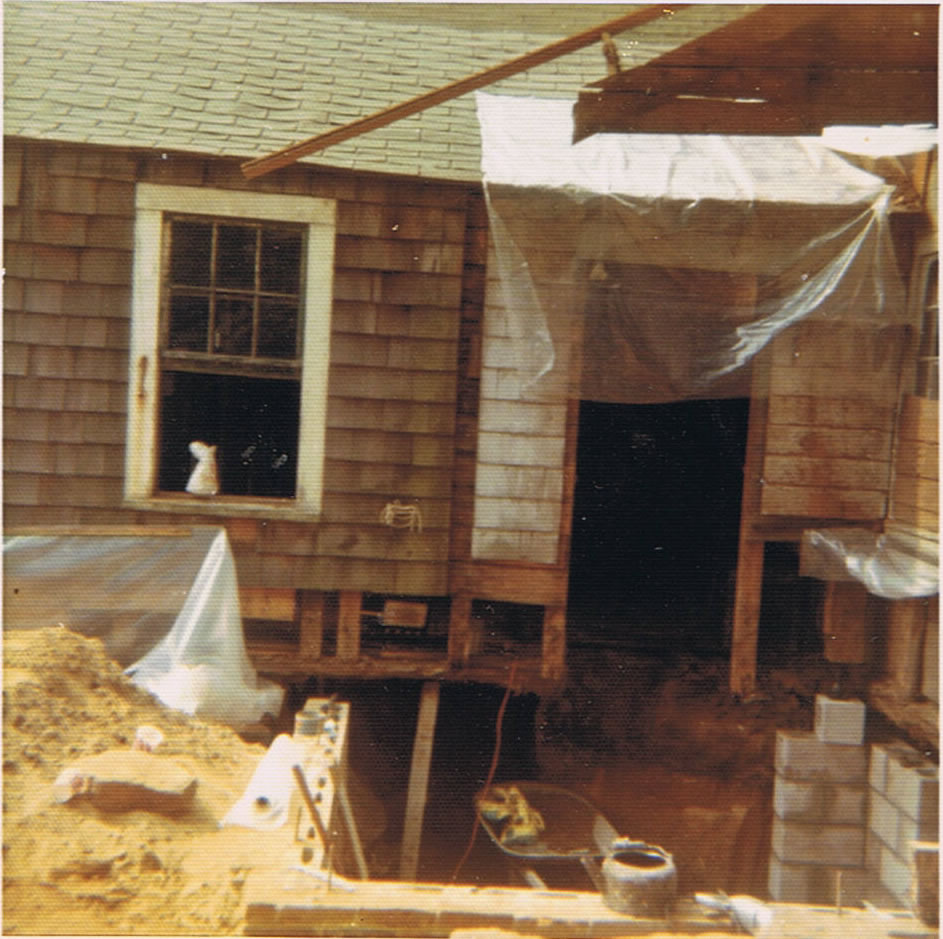
One of the first things we had to put in was, of course, a bathroom.  Since our budget didn’t allow for much more than purchasing the house, we would have to do everything.  By hand.  Here is a shot of the back of the house after taking down the later woodshed.  Yes, we’d be going out to the woodshed again, to use the bathroom.  But at least this one would be attached and have running water.  The big hole in the ground was dug by hand, by Edward, with a little help from a friend.  Then he constructed the cinder block foundation, block by mortared block.  No matter how much progress you think you’re making with an old house, sometimes, it seems there are as many steps in reverse.  The more you uncover, the more work you see ahead of you.  Another sill, or rotted post, and everything being connected – another stud to replace, or joist rotted at the end, or girt whose rafters no longer reach…and on it goes.

Thank God for the treasures!  And the youth.  This photo shows the hole covered and deck on, and the exterior wall of the original 1720 two story ell.   A picture’s worth a thousand words – but I’ll probably say them anyway.
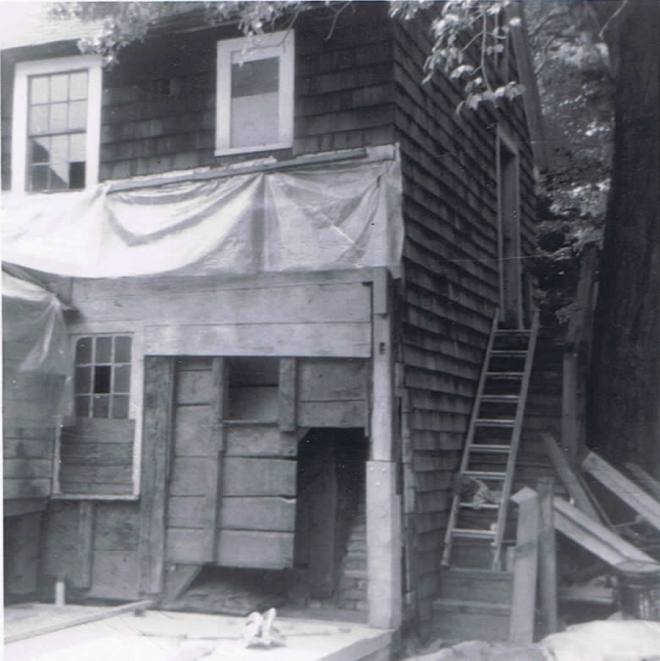
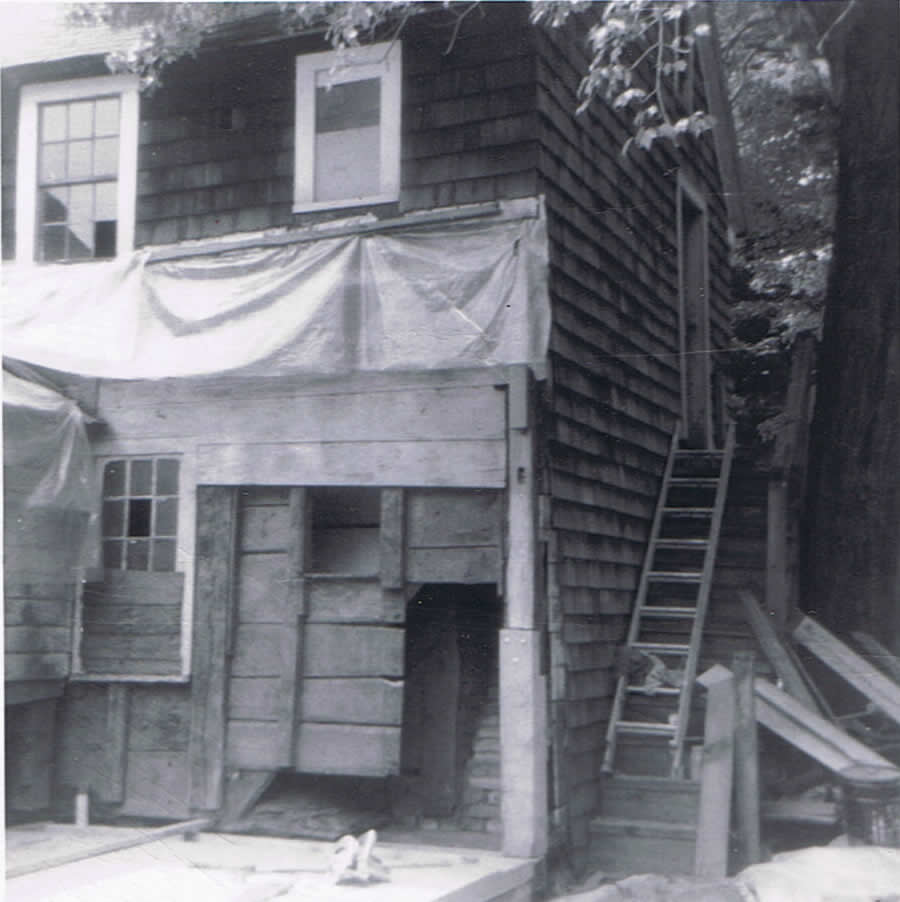
The stair at the back of the house was for one of the many “renters” who lived here over the years.  Through the wall sheathing you can see the the back of the original chimney and a bit of the construction of the interior back stair.  My favorite part of the whole house – a narrow two panel door in the paneling leads to this primitive back stair with exposed and whitewashed studs and joists.  As as you wind up the stair, there’s a landing with a built in bookcase which has aged a deep chestnut color.  And on the featherboard wall beside it, there is faded writing, some of which says “war of 1776.” This entire stairwell area is lit by a casement window, boarded up in the photo. Years later, this stair is how our little one would get to her room at night.  Instead of candles as in the 18th century, she used a flashlight.

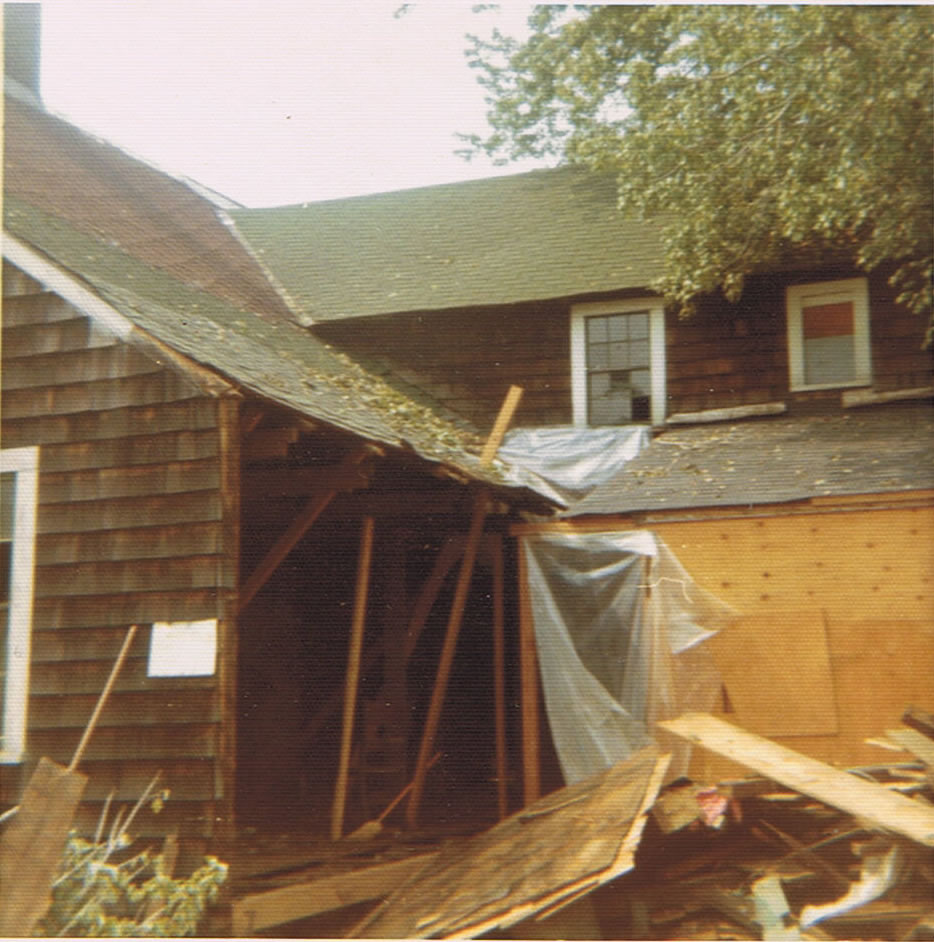
As I said, one thing leads to another.  Not until you uncover it all, do you see the extent of the work.  Here is the back wall of the lean-to section of the house.  By the way, the original two story section of the house was built in 1698, the two story ell was erected in 1720 (we found writing on the joists) and discovered the timbers were re-used, they came from an earlier house.  And the lean-to, that makes it a saltbox on one side, was put on around 1760.  Meanwhile, we had to remove the entire back wall, replace the girt, re-engage the joists into the new one, replace the sill, and re-stud.
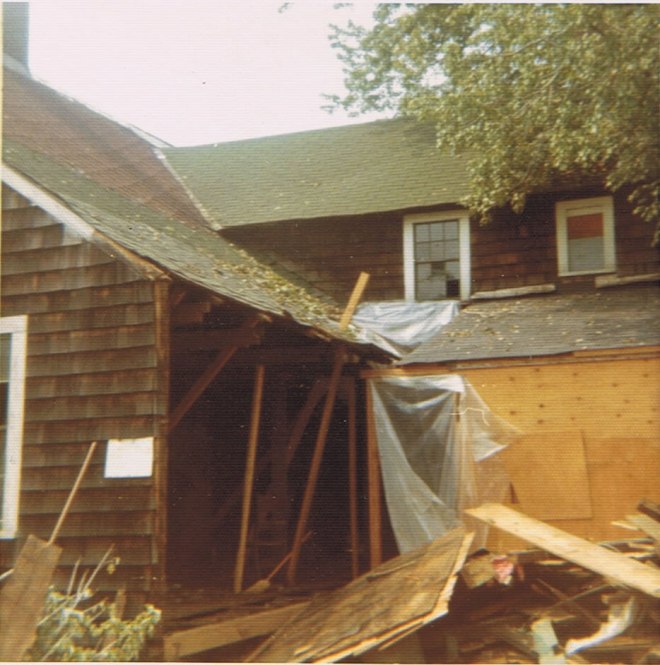
One scary event – this wall was open, with plastic covering it overnight.  We were away – and a tornado came through our neck of the woods that day.  We thought there’d be nothing left – but fortunately it missed us.  I know – it looks like it hit us!
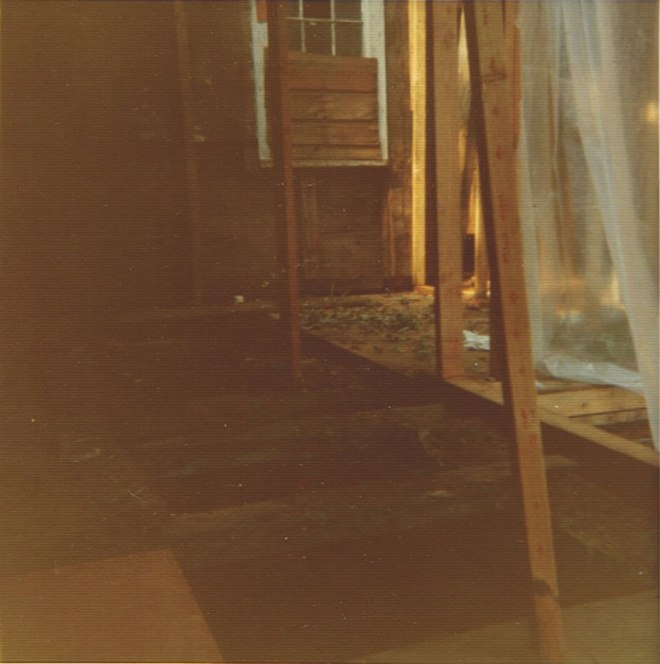
The hole where our future kitchen will be.
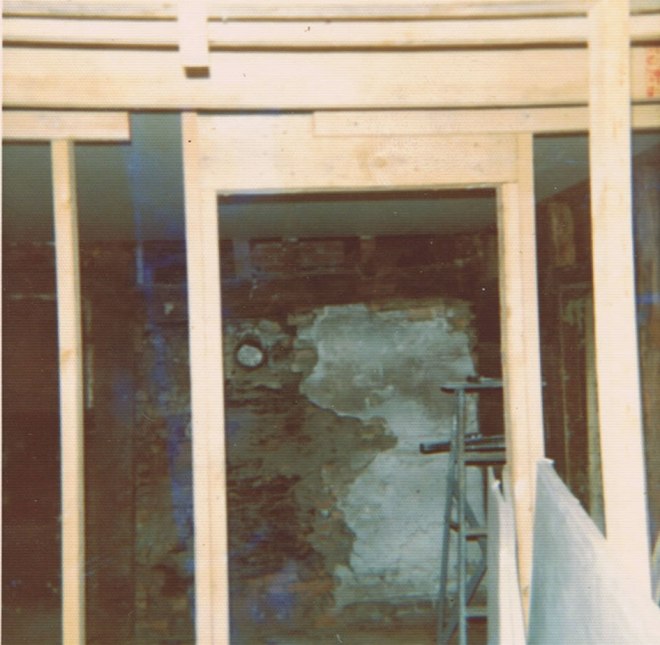
Another hole for – guess what?  We would add a small kitchen fireplace here, and a paneled wall.

More interior shots.  We have our work cut out for us.

1720 addition

Original paneling, with a hole where that darn stove was vented.  To the right of this fireplace is the door to the “secret” stair.
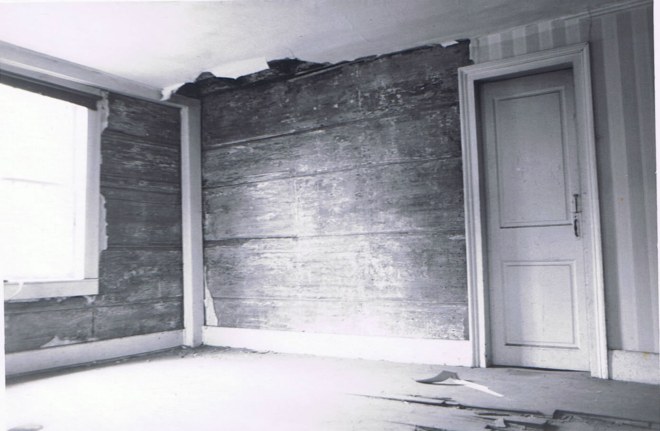
A section of the room that was the original kitchen.  We’ve removed that old beaver board (forerunner to sheetrock) to expose original horizontal featherboards.

And upstairs:
I love this shot.  This is the upstairs front bedroom.  It had been divided into two rooms by this wall which was constructed across it from the fireplace to the window.  They had to slant the wall, as though they’d built it across and then said “oops!”  The original plaster still barely clings to the walls and the whitewashed beams are exposed.  Awesome!
On the left you see the backside of that wall that divided up the room – and the bit of fireplace mantel showing!  Imagine building a wall right into the decorative mantel?!  Note the featherboarding covered with wallpaper – and the gunstock post to the right.  Through the hallway you can see the “apartment” they created in the other front room.  This room also was divided, painted six different colors, and a crude kitchen added.  Here’s an old polaroid I found.
Another room, another stove, another hole.  The room may be pink and green and yellow – but it’s all wood.  Original featherboard doors are still in their places, opening to tiny closet spaces.  The original flooring at the second floor is big and beautiful and wide, and serves as the ceiling of the first floor below.

And all of this, the heaviest, dirtiest work, Edward did alone.  I was working during the day to help buy materials, and food for the project.  Then nights and weekends were my turn.  He was still an aspiring musician/songwriter, and that future hit song was going to pay for the rest of this restoration!  Those were the days.  One of the many travels in pursuit of a music career took us to London – right after we bought the house.  We (and the band) came back with a record deal several months later, well, it was the promise of a deal – with just some fine print to work out.  Two weeks after our return, they called to say they could sign only one act right now – and decided to go with an obscure band from Texas – by the name of ZZ Top.

After two more years, spent in Los Angeles, and some interesting times, we came back with our infant daughter, and resumed the restoration – without the help of that million-dollar hit single.  Instead, LA handed us another “almost.”  While there, the manager spent the advance money, which was to record that single, on a house for himself.  It’s a long story.

Needless to say, this old house business was looking like a worthwhile career.   We began to do this work for others as well.  The rhythm and balance of art and music would serve us well over the years, incorporated into the design and restoration of 18th century architecture.   After all, like Goethe said –  “Architecture is frozen music.”

in the beginning

Well, not the beginning, but rather the start of the restoration of our own house.  I thought I’d share in a series of entries here, some photos and info on the work of it, which also took place at the beginning of time, or so it seems.  We were in our early twenties, and, surprisingly in counting back, it was our fifth house project.  My husband happened upon it one day, and of course, like a magnet, was attracted to its lines, its center chimney, doorways, and the sixth sense that told him it was empty.  Trespass, when it comes to old houses and helping them, is a risk, but a necessity.

After walking around it squinting through windows for a time, he heard the sound of a tractor behind him, and realized he was about to have to explain himself.  The farmer wearing a broad hat and baggy overalls, pulled up right onto the front lawn, turned off the engine, leaned over the wheel of the tractor, and gave him a stern look.

Edward was always charming, smart, and kind.  But in his youth complained that adults didn’t take him seriously because of his long hair and musician look.  His mom would always assure him then that as soon as he spoke, they’d see beyond his looks.  And she was right.

But would it work with an angry farmer?  Edward was passionate, sincere, and believable.  He was truthful.  But this farmer wasn’t buying it, at first.  He didn’t take out a gun, but his huge frame and angry scowl was intimidating.  The farmer just couldn’t believe that anyone might have an interest in this broken down old house that he was planning to let the fire department practice on.  Once finally convinced that this young man might actually be willing to pay cash for the place, the farmer’s ears perked up, his face brightened, and though in disbelief, his interest was peaked.

After much conversation, meetings and dealings, and in spite of the fact that the house looked on the inside like it had already been in a fire – we ended up with that crooked, broken down, dilapidated old place.  The farmer would continually scratch his head, feel guilty about selling it to us, and for years drive over in that tractor with a bushel of squash or cucumbers, homemade sauerkraut, even maple saplings from the meadow – three of which are planted across the front yard.  Offerings of old timbers from fallen tobacco sheds, which we’d use to replace rotted sills, and numerous other gifts of vegetables and Yankee tales, would sustain and entertain us for years.

Happy Holidays!

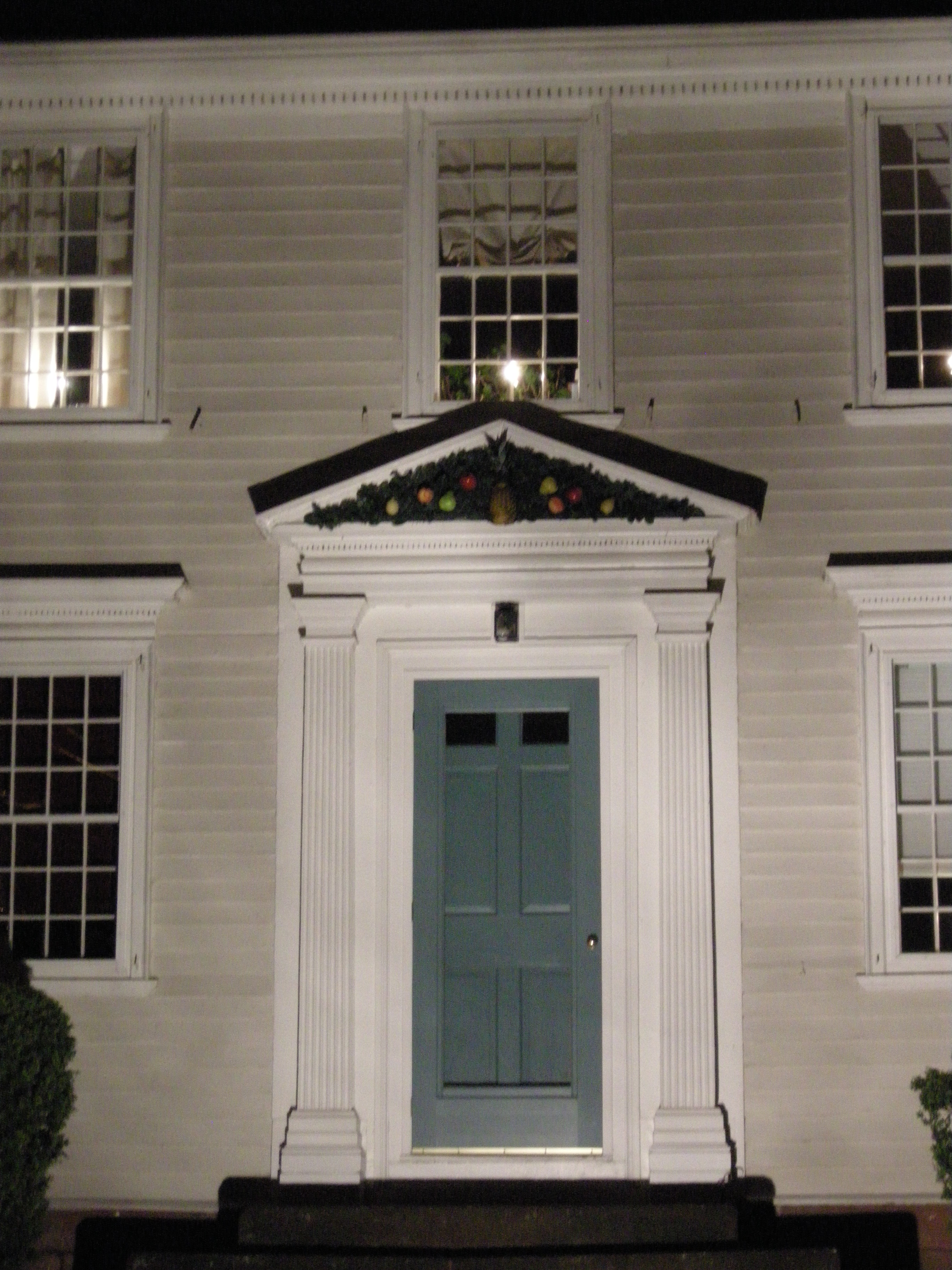
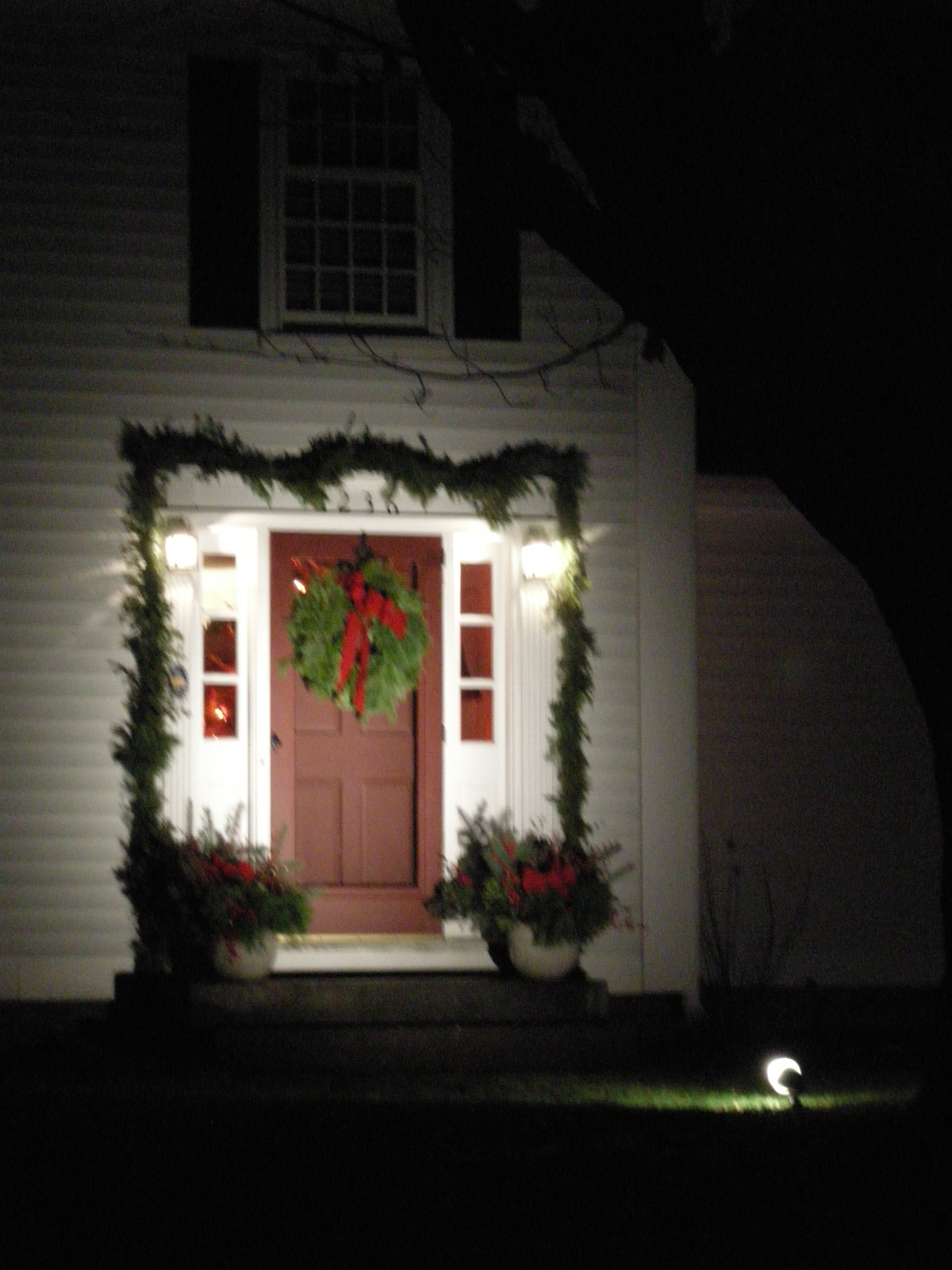
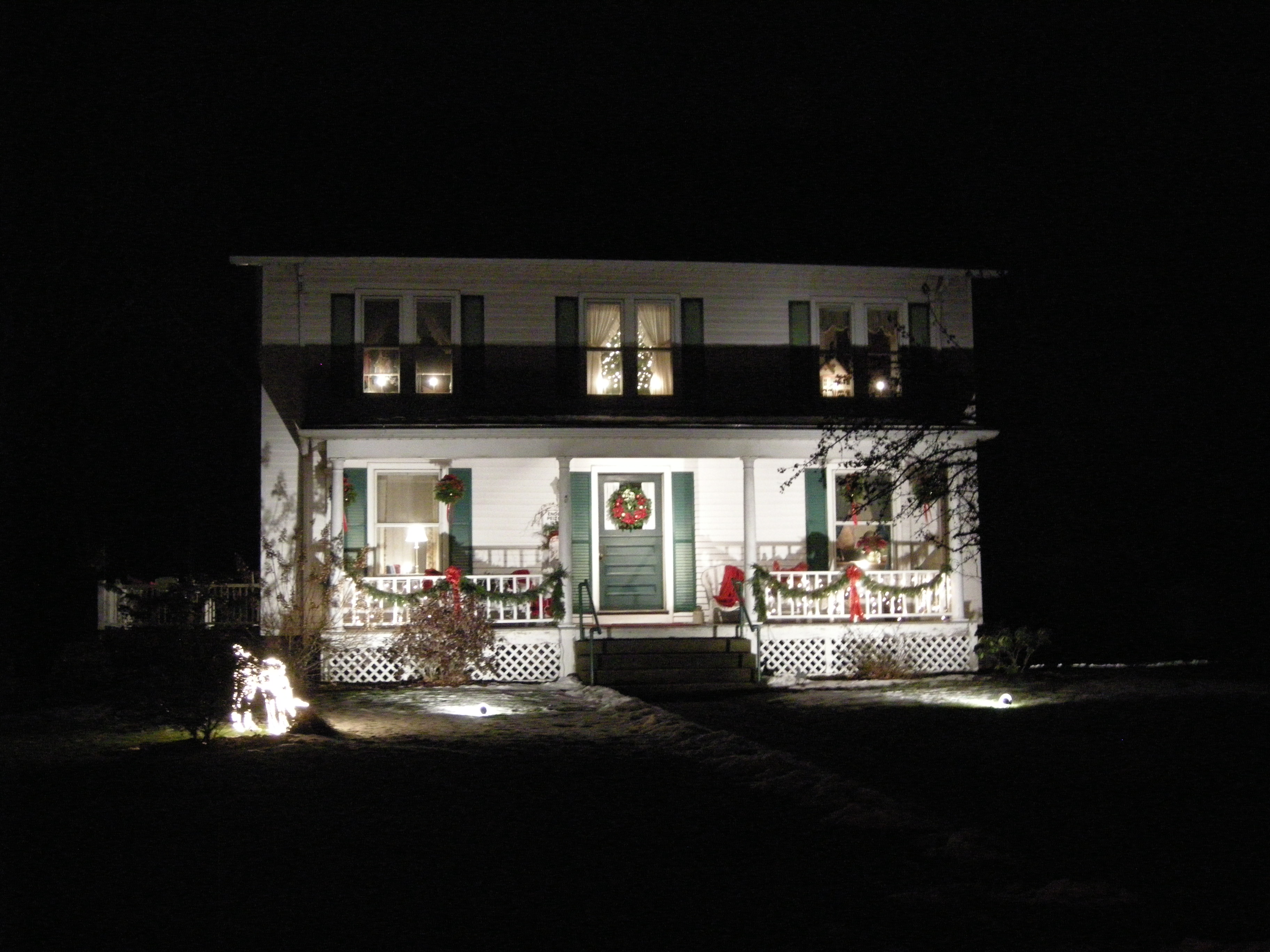
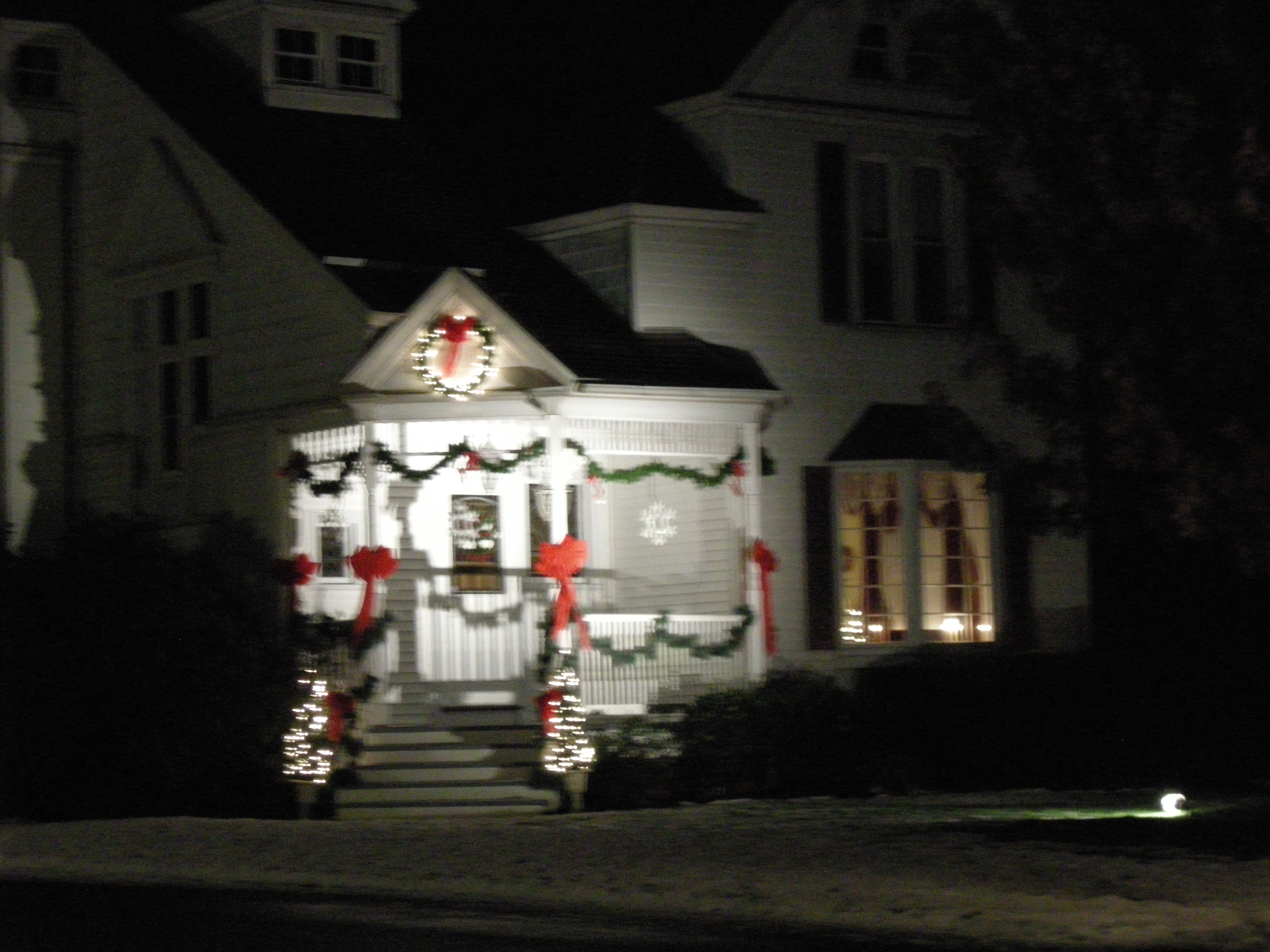
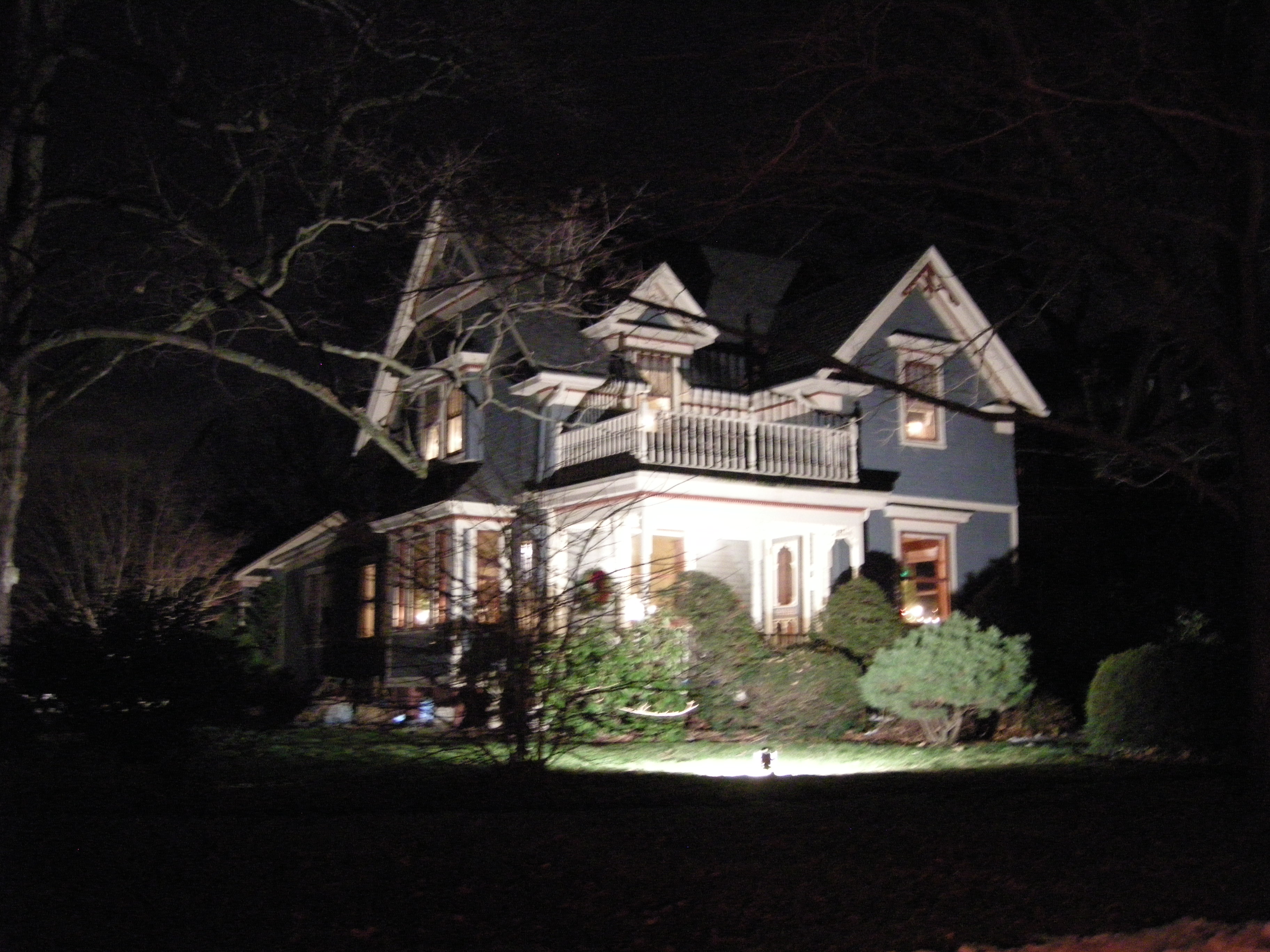
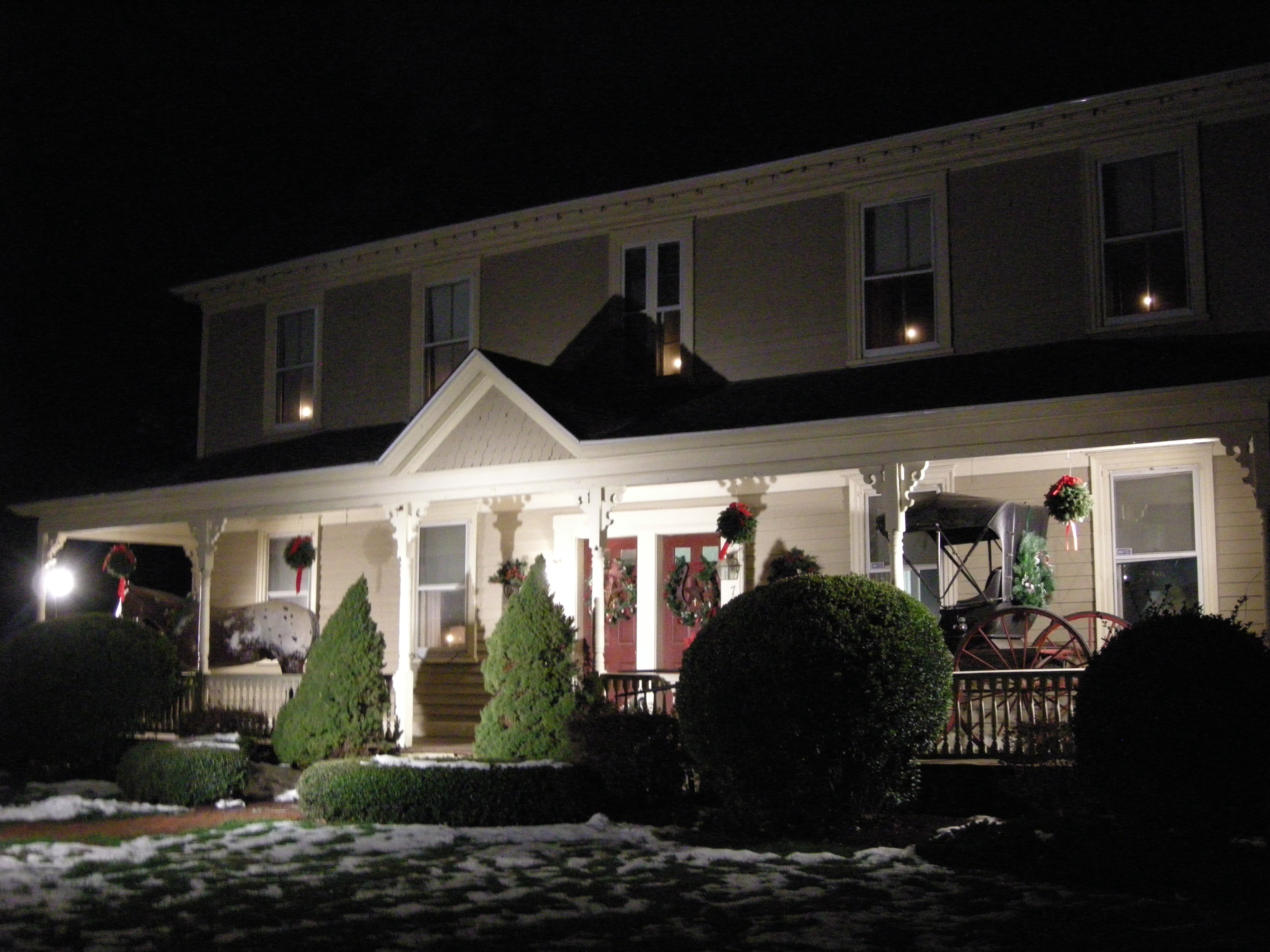
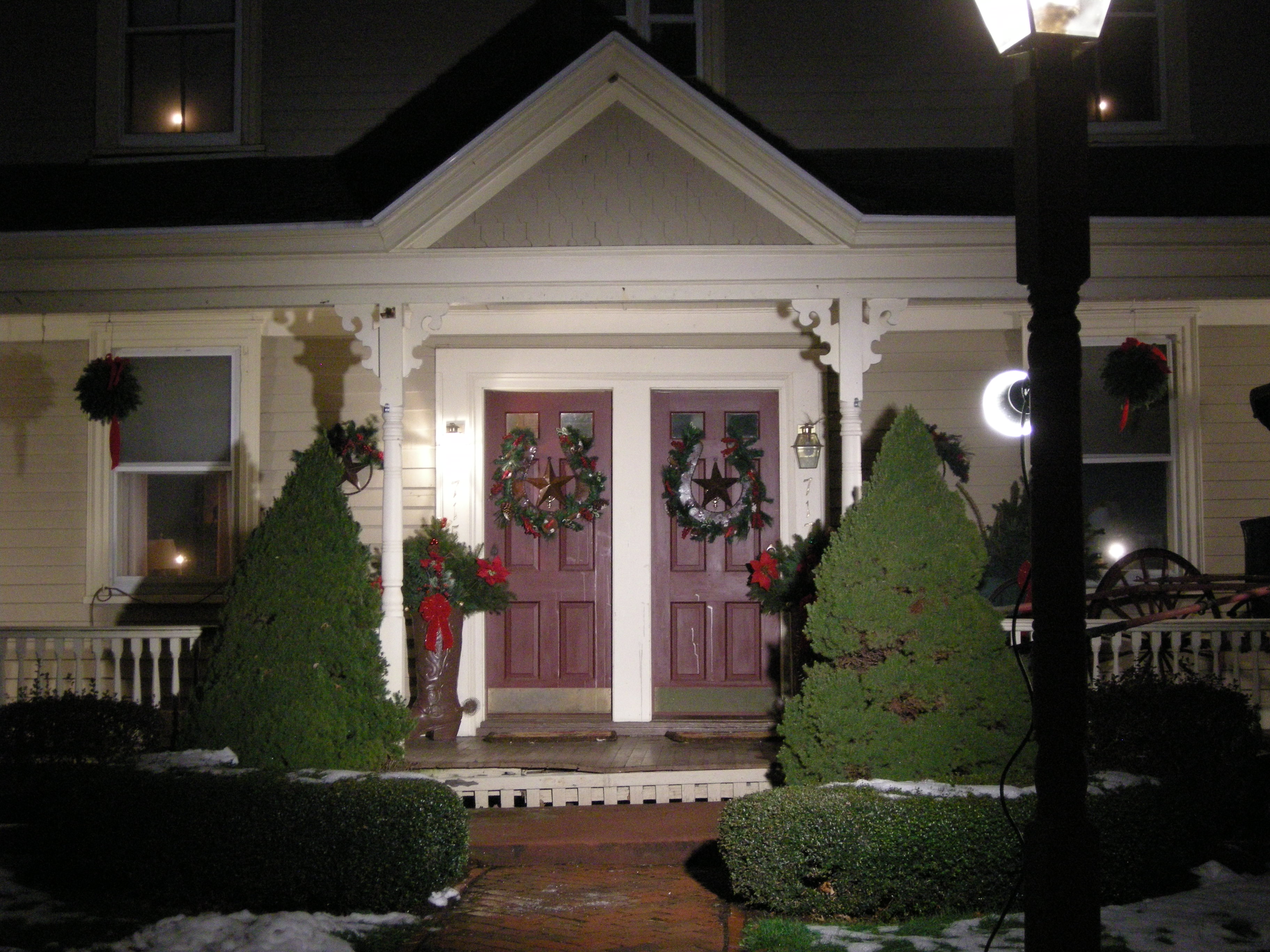
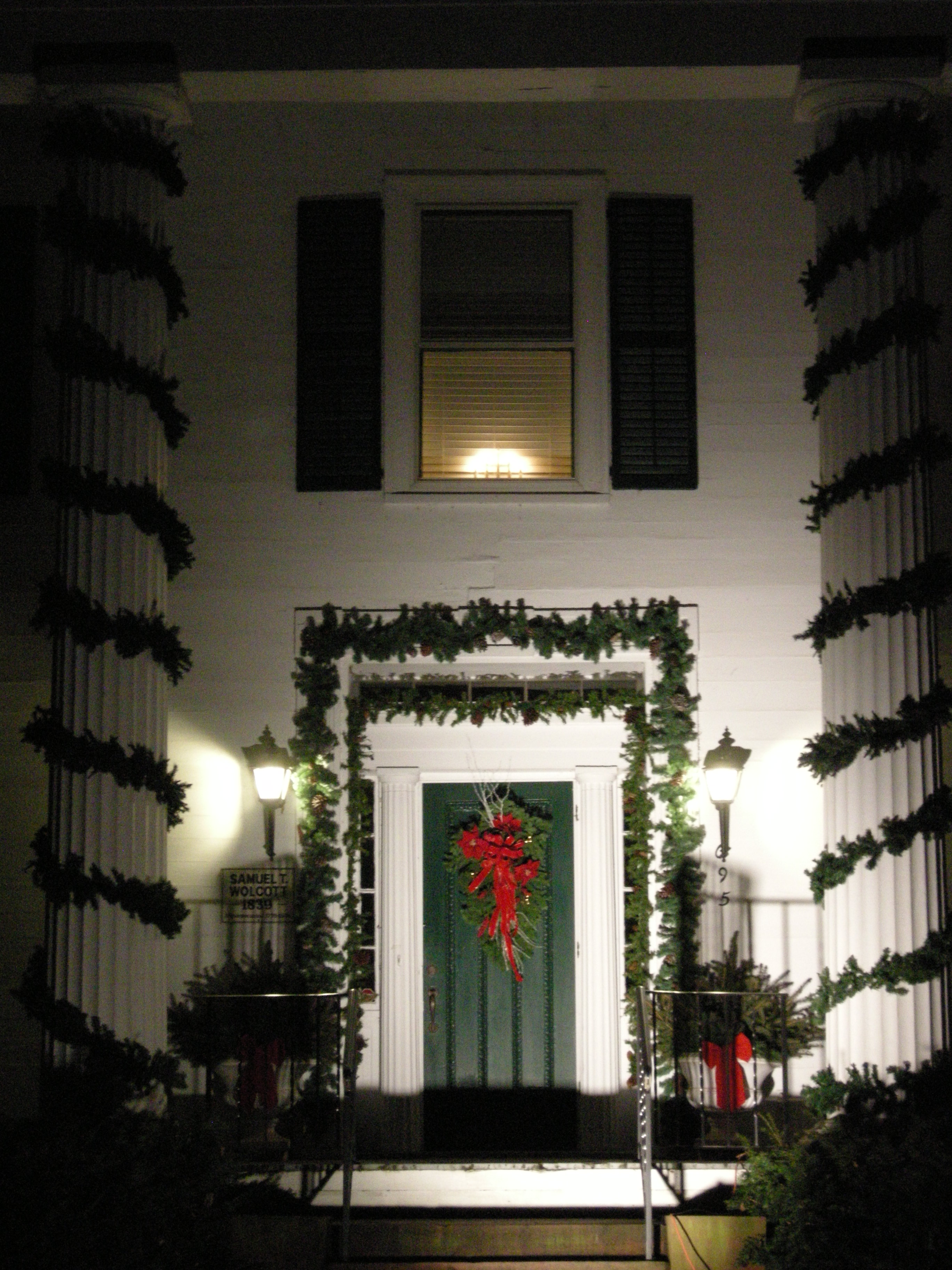
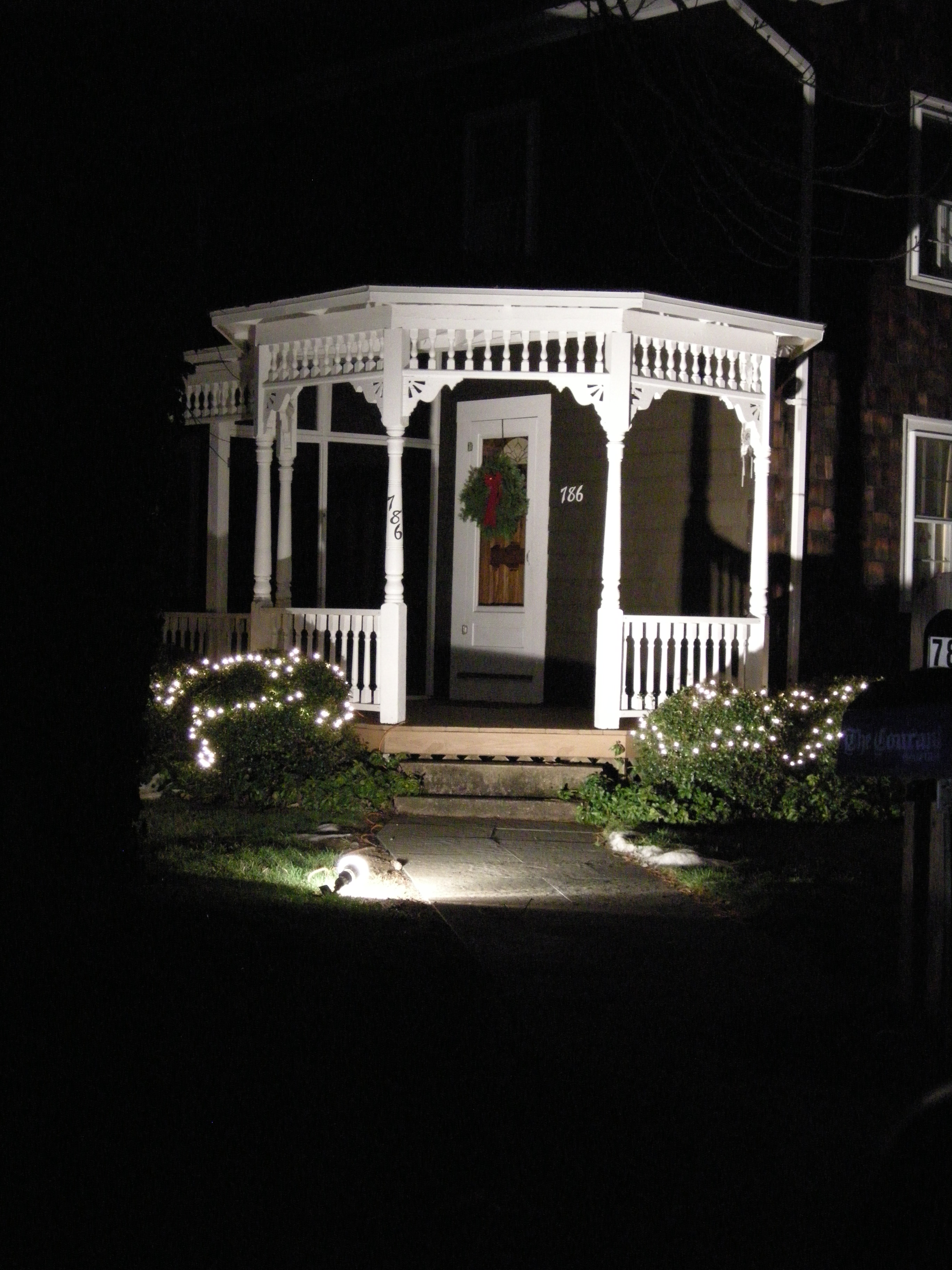
The neighborhood here is rich with history and the architecture that reflects it.  At this time of year, 18th century homes dressed festively with greens, and small paned windows lit with candles, harken us back to a calmer, simpler time when these colonial homes, warmed by fires and friendly spirits, welcomed friend and traveler.

I wanted to share some holiday images, from our neighborhood to yours, and wish you all a Merry Christmas!

to think this house is from Sears!

yes - that's a horse and carriage on the porch!

and horseshoe wreaths and cowboy boot!

Happy Holidays All – and may the New Year hold for you love and peace and endless possibilities!